

Neurodivergent and feeling behind in life? Whose timeline are you following?


You log onto social media and see an announcement from someone you went to school with. They’re buying their first home. You’re happy for them…but you’re also wondering whether you’ll ever be financially secure enough to do the same. Then you start reviewing everything else you thought you would have figured out by now.
In my work with neurodivergent clients, this frustration comes up often. There’s usually a particular age attached to a certain life expectation: “I thought I’d have a career by thirty.” “I didn’t expect to still be looking for a partner at forty.”
These can be things we deeply want. But somewhere along the way, wanting them becomes a deadline, and missing that deadline starts to feel like proof that something is wrong with us.
What the Timeline Leaves Out
I didn’t get my driver’s license until I was around twenty-six. Where I grew up, learning to drive was an expected part of being a teenager. By that measure, I was years behind.
But the age alone tells you very little about why it took me that long, and it certainly doesn’t tell you how capable I was in other areas of my life.
That’s a problem with using neurotypical milestones to judge adulthood. We see whether someone has reached them without necessarily seeing what made it possible or difficult.
A person who finishes a degree while their family covers rent has different demands on them from someone studying while working to pay the bills. If you’re also struggling to organize assignments or trying to obtain accommodations as a neurodivergent with executive dysfunction, the same qualification may take considerably more effort.
“Why Could They Do It When I Couldn’t?”
When several parts of life haven’t worked out as hoped, it’s easy to decide you must be the problem. You were the reason, after all, that the course wasn’t finished, or the job didn’t last.
But maybe it wasn’t simply a matter of choice. Maybe there are genuine difficulties related to your neurodivergence you need help with, or differences such as being multi-passionate, that can explain why you aren’t where you expected to be. Calling yourself a failure doesn’t explain what support was missing or what would help you move forward.
It’s important to remember that autism and ADHD are regarded by the medical establishment as neurodevelopmental disorders. As such, it’s fair to expect that we might be behind on multiple fronts.
Something that has helped me personally is imagining that I have an extra ten years. When I feel disappointed about where I am at forty, I ask whether I’m measuring myself against expectations I formed for thirty, before I understood what I would be dealing with.
That’s a way of loosening the pressure. Even so, I don’t want it to become another deadline. Turning forty shouldn’t mean being handed a revised list of everything you must accomplish by fifty.
The useful question is: knowing what I know now, what would be a reasonable expectation? A goal I set before recognizing my support needs may need to change. I’m allowed to reconsider it.
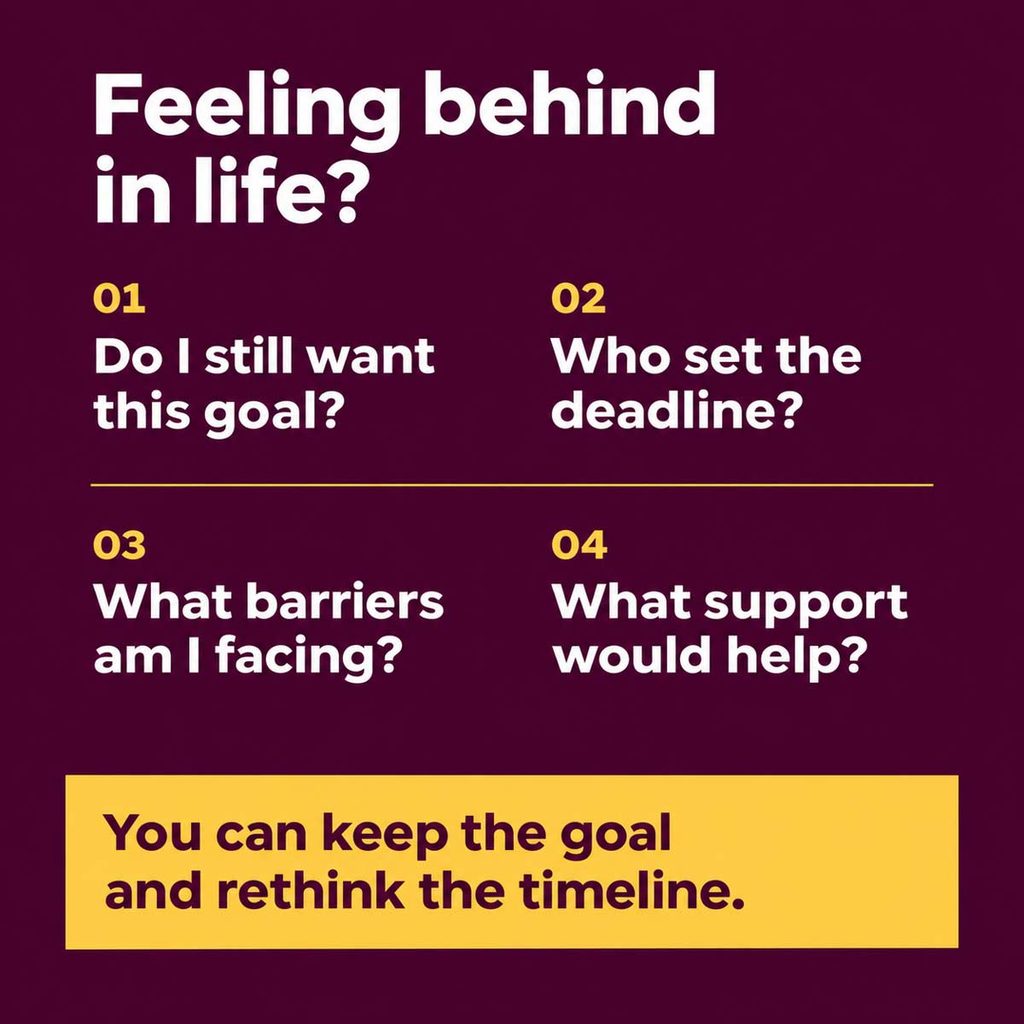
Do You Still Want the Same Things?
Sometimes the goal still matters enormously. You want a partner, and being told to appreciate your friendships doesn’t resolve the loneliness. You want stable housing, and a sense of belonging elsewhere doesn’t pay your rent.
There should be room to acknowledge that disappointment. Self-compassion doesn’t require pretending you’re satisfied.
Other goals may deserve a closer look. Perhaps you’ve pursued a particular career because it seemed like proof of success, even though the work leaves you exhausted. You might prefer a less demanding job that gives you time for relationships and interests you keep postponing.
It can help to ask:
- What do I want this milestone to give me? Owning a home might represent security. Marriage might represent companionship or being chosen.
- Do I want the goal, the deadline, or both? You can still want a relationship without deciding that being single at a certain age makes you inadequate.
- What would make progress more possible now? That might be practical assistance, a different route, or permission to focus on one goal while another waits.
Answering these questions can help you decide where to put your effort instead of treating your whole life as overdue.
Wrap Up
You may still wish things had happened sooner. I know I do. But I want to judge my progress with some understanding of what it cost and what help I had at the time.
You can still value and pursue an important goal while being kind to yourself about where you are in your life. You can want something to change without using its absence as proof that you’ve failed.Which milestone have you felt pressured to reach by a certain age?
Essy Knopf is a therapist who likes to explore what it means to be neurodivergent and queer. Subscribe to get all new posts sent directly to your inbox.
© 2026 Ehsan "Essy" Knopf. Any views or opinions represented in this blog are personal and belong solely to the blog owner and do not represent those of people, institutions or organizations that the owner may or may not be associated with in professional or personal capacity, unless explicitly stated. All content found on the EssyKnopf.com website and affiliated social media accounts were created for informational purposes only and should not be treated as a substitute for the advice of qualified medical or mental health professionals. Always follow the advice of your designated provider.