

I don’t hate people—I’m just out of social battery


One of the more confusing realities of being neurodivergent is realizing you can genuinely enjoy people while also feeling completely depleted by them.
For years, I interpreted this contradiction as a personality flaw.
I’d spend large chunks of my week surrounded by people—clients, classmates, colleagues, friends, family members—and often enjoy those interactions. I like meaningful conversations. I value community. I want connection.
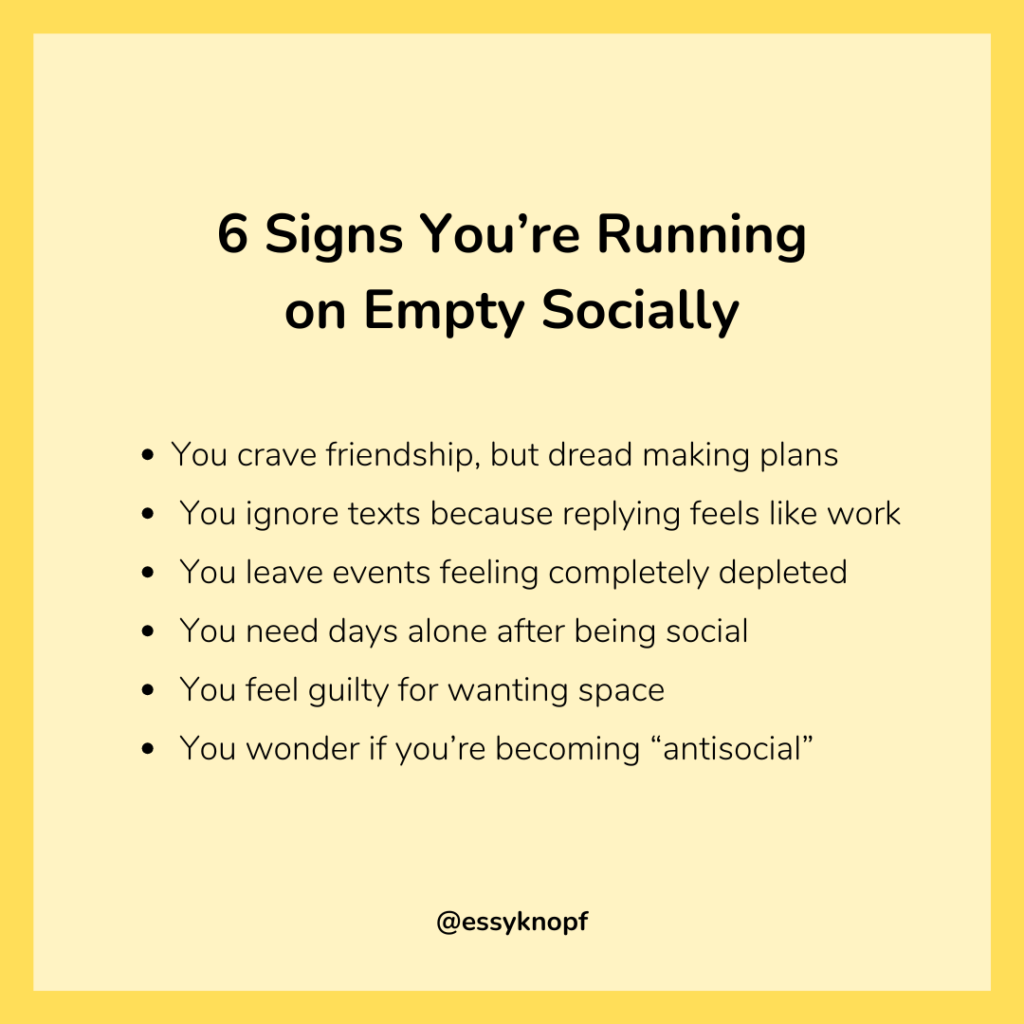
And yet there would inevitably come a point where even the smallest social interaction would begin to feel unbearable.
A text message would come through and I’d feel irritated.
Someone would try making small talk and I’d immediately want to escape.
I’d attend a social event with every intention of staying, only to find myself mentally planning my exit within the first hour.
At my worst, even making eye contact can feel like too much effort.
This used to leave me feeling ashamed.
How could I claim to care about people while simultaneously feeling so overwhelmed by them?
Was I antisocial? Selfish? Secretly a misanthrope?
The answer, I eventually realized, was much simpler: my neurodivergent social battery was depleted.
For many autistics and ADHDers, social interaction involves far more effort than others realize.
We may be masking our natural communication style. We may be monitoring our facial expressions to appear engaged. We may be suppressing stims, navigating sensory overwhelm, interpreting vague social cues, and carefully filtering our words to avoid being misunderstood.
Even when those interactions are positive, they can still be draining.
And when life already demands constant interaction—whether through work, school, caregiving responsibilities, friendships, or community obligations—our social battery can burn out quickly.
This is where things can feel especially frustrating.
Many neurodivergent people genuinely want connection. We may want close friendships, romantic relationships, community spaces, and meaningful conversations.
But wanting connection doesn’t mean we always have the capacity for it. That distinction matters.
Unfortunately, many of us compare ourselves to neurotypical people who seem able to maintain packed social calendars with little visible effort. They work full-time, attend gatherings, reply to messages instantly, maintain friendships, and somehow still seem energized.
Meanwhile, we may need an entire weekend alone just to feel remotely functional again. That comparison can trigger intense shame.
We tell ourselves we should push harder. Stay longer. Be more available. Try harder to seem engaged.
But shaming yourself into social performance rarely works. It usually just accelerates burnout.
Learning to respect your social limits can feel deeply uncomfortable, especially if you’ve spent years measuring your worth through productivity or availability.
Sometimes respecting your needs looks like leaving an event early. Sometimes it means declining invitations.
Sometimes it means spending your weekend gaming, reading, lying in bed, or sitting in complete silence while your nervous system recalibrates.
That isn’t laziness or avoidance, but self-awareness. And the more you honor your limits, the more sustainable connection becomes.
Have you ever found yourself craving connection while also feeling completely overwhelmed by people?
What helps you recharge when your neurodivergent social battery runs low?
Essy Knopf is a therapist who likes to explore what it means to be neurodivergent and queer. Subscribe to get all new posts sent directly to your inbox.
© 2026 Ehsan "Essy" Knopf. Any views or opinions represented in this blog are personal and belong solely to the blog owner and do not represent those of people, institutions or organizations that the owner may or may not be associated with in professional or personal capacity, unless explicitly stated. All content found on the EssyKnopf.com website and affiliated social media accounts were created for informational purposes only and should not be treated as a substitute for the advice of qualified medical or mental health professionals. Always follow the advice of your designated provider.