

Dopamine dysregulation: Why passions can help neurodivergent brains recharge


One of the lesser-discussed challenges of ADHD and autism is dopamine dysregulation.
Many neurodivergent people live with brains that struggle to maintain consistent dopamine levels, which can create an ongoing need for stimulation, novelty, or emotional engagement.
When dopamine drops too low, the result can feel like an emotional and physical slump.
This often happens after work, during weekends, or anytime structure suddenly disappears. Once the external demands stop, neurodivergent individuals can be left feeeling flat, understimulated, emotionally depleted, or even mildly depressed.
To cope with dopamine dysregulation, many people instinctively seek fast sources of stimulation. This might look like binge eating sugar or carbs, marathon gaming sessions, doom-scrolling social media, impulse shopping, or endlessly consuming content online.
These behaviors are often attempts to regulate a nervous system struggling with dopamine dysregulation.
One healthier approach comes from cognitive behavioral therapy, specifically a strategy called behavioral activation. The idea is that engaging in activities that create a sense of mastery and pleasure can improve mood and reduce depressive symptoms.
For neurodivergent folks, this can be especially powerful when the activity directly addresses dopamine dysregulation by providing meaningful stimulation.
This is where special interests and passions become important. Writing, art, music, coding, puzzles, Lego builds, crafting, researching niche topics, or creating content online can all help regulate dopamine levels in a sustainable way.
These activities work because they provide both pleasure through stimulation and enjoyment, and mastery through progress, accomplishment, and skill-building.
That combination can help counter the emotional crashes associated with dopamine dysregulation.
Importantly, these activities do not need to be massive or energy-intensive. In fact, the best tools for managing dopamine dysregulation are often small, repeatable, and easy to engage with consistently.
A 20-minute creative session, practicing a song, organizing a collection, or working on a passion project may provide enough stimulation to shift the nervous system out of a slump.
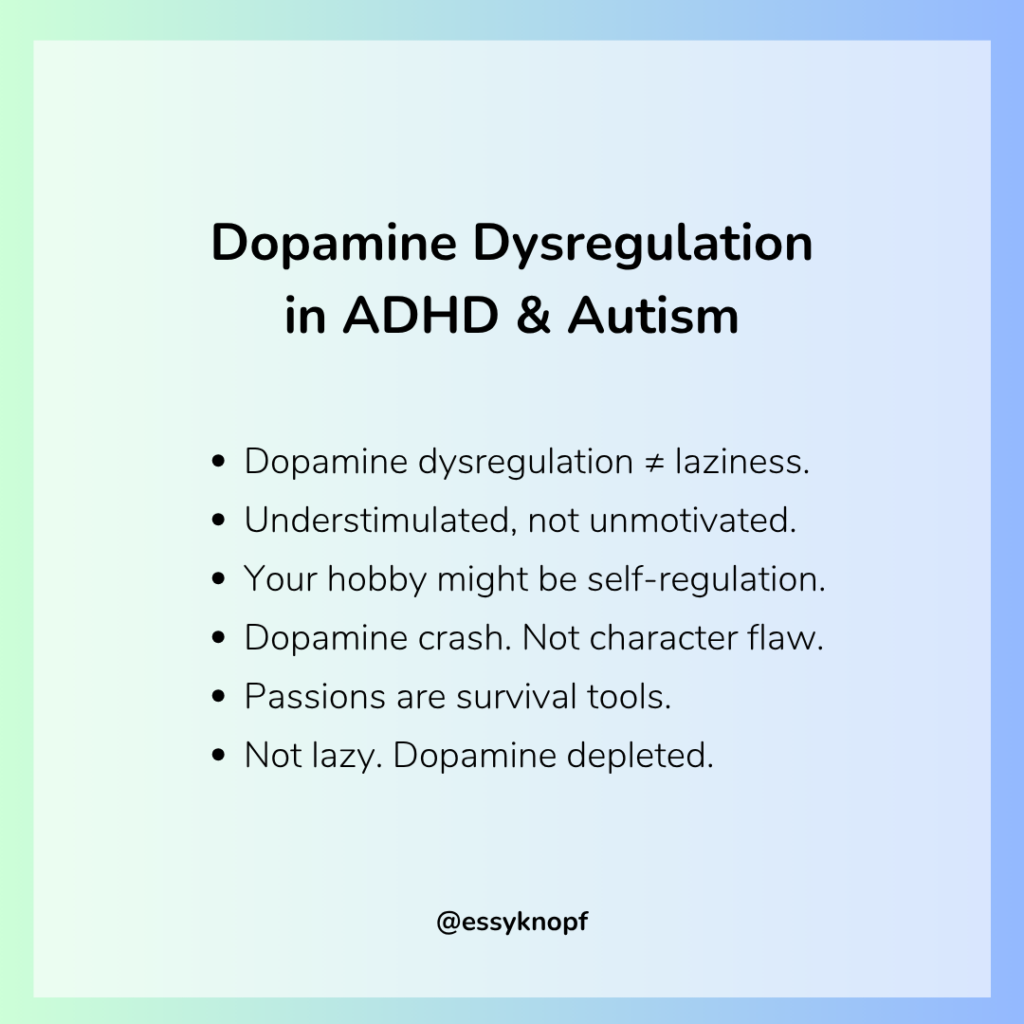
Many autistic and ADHD individuals are taught to feel ashamed of their intense interests. But in reality, these passions may serve an important self-regulation function. Special interests can help stabilize mood and soothe the effects of dopamine dysregulation in ways neurotypical people may not fully understand.
While dopamine dysregulation can make everyday life feel emotionally exhausting for autistic and ADHD individuals, understanding what your brain is actually seeking can help you respond with compassion rather than shame.
What activities help you manage dopamine dysregulation? Are there special interests or hobbies that reliably pull you out of a slump? I’d love to hear your experiences in the comments.
Essy Knopf is a therapist who likes to explore what it means to be neurodivergent and queer. Subscribe to get all new posts sent directly to your inbox.
© 2026 Ehsan "Essy" Knopf. Any views or opinions represented in this blog are personal and belong solely to the blog owner and do not represent those of people, institutions or organizations that the owner may or may not be associated with in professional or personal capacity, unless explicitly stated. All content found on the EssyKnopf.com website and affiliated social media accounts were created for informational purposes only and should not be treated as a substitute for the advice of qualified medical or mental health professionals. Always follow the advice of your designated provider.