

When accessibility isn’t actually accessible for neurodivergent folks
When people hear the word accessibility, they often think of ramps, elevators, wheelchair access, and accessible parking spaces. These accommodations are essential—but they’re also only part of the picture.
What often gets overlooked are the needs of people with invisible disabilities, including autistic and ADHD individuals.
You can walk into a space that appears inclusive on paper and still find yourself completely shut out of the experience.
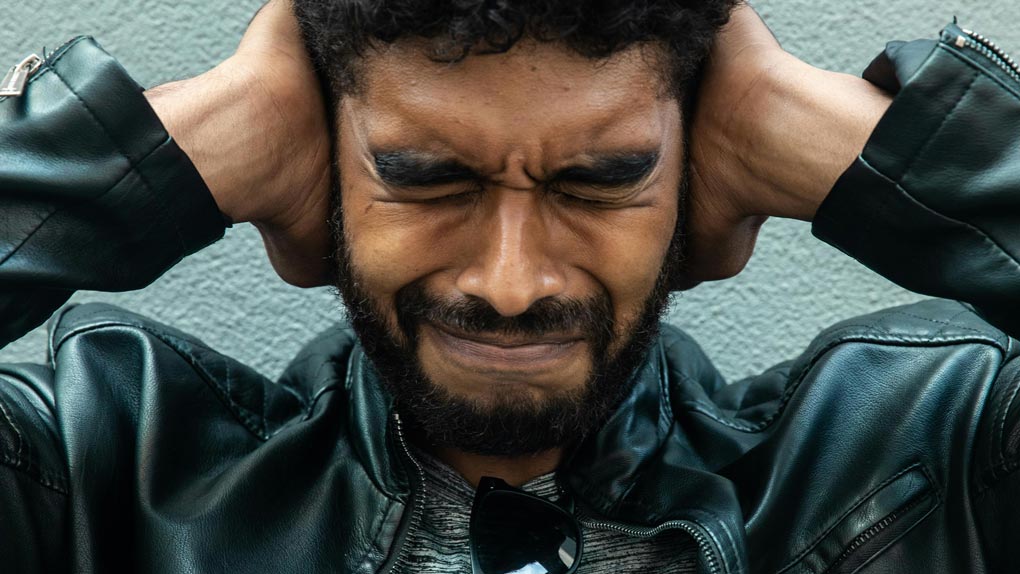
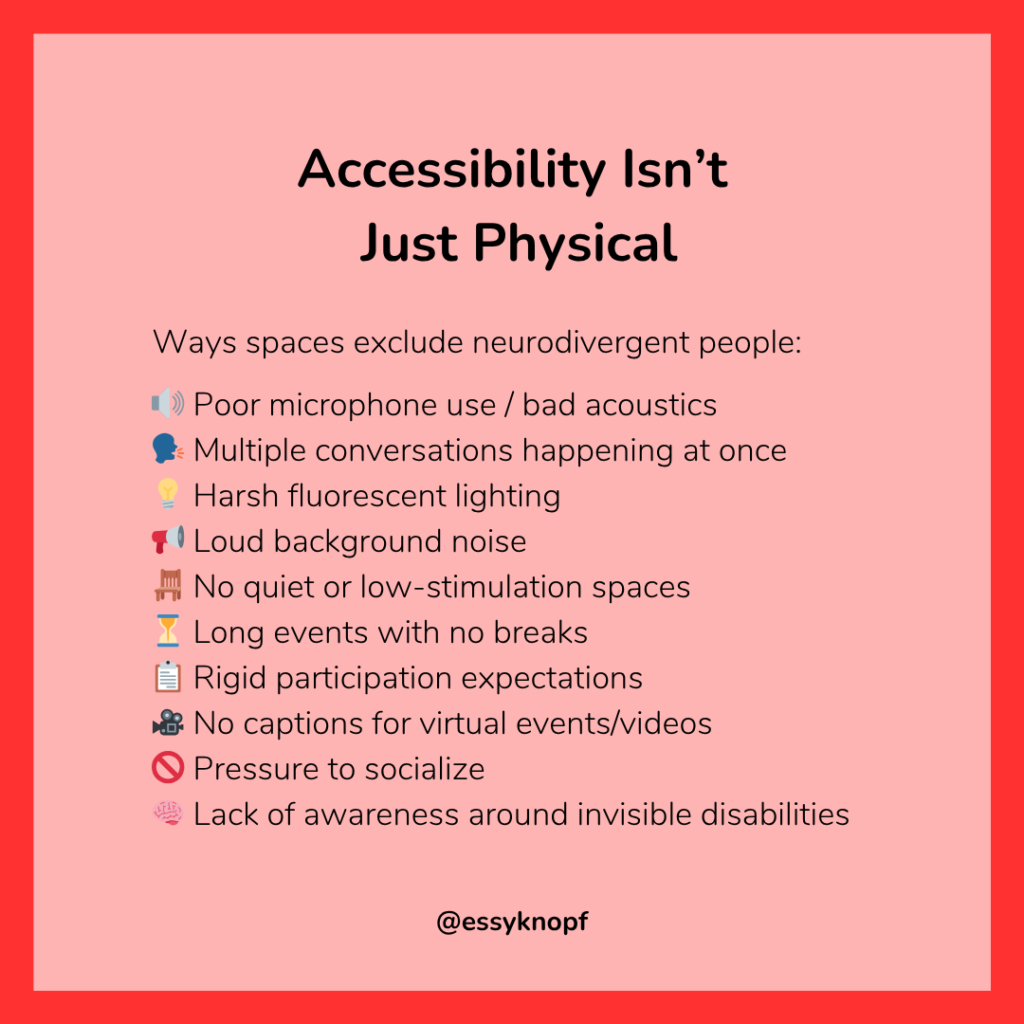
Maybe the room acoustics are terrible, making it impossible to hear someone speaking. Maybe multiple conversations happening at once create sensory overload. Maybe fluorescent lighting feels physically painful. Maybe there’s no quiet space to decompress when things become overwhelming.
For someone with auditory processing challenges, ADHD, autism, sensory sensitivities—or a combination of these—these barriers can make participation exhausting.
I recently found myself in a community setting that was technically accessible. It had clear accommodations for physical disabilities, which was genuinely great to see.
But every time someone spoke into a microphone, they stood too far away for their voice to be heard clearly. Instead of hearing words, I heard muffled echoes and background noise.
Then came the social portion of the event, which was crowded, loud, and acoustically chaotic.
I wanted connection. I wanted community.
Instead, I found myself overwhelmed and frustrated.
And this is where many institutions miss the mark: accessibility often focuses on what can be easily seen while ignoring what can’t.
True accessibility should also include:
- Clear microphone usage
- Captioning whenever possible
- Sensory-friendly spaces
- Quiet rooms or low-stimulation areas
- Flexible participation options
- Awareness of auditory processing challenges
- Recognition that not all disabilities are visible
Inclusion shouldn’t stop at physical access.
If someone can enter your space but can’t meaningfully participate once they’re there, that space still isn’t fully accessible.
And that’s a conversation we need to be having more often.
Accessibility should evolve alongside our understanding of disability.
Invisible disabilities deserve visibility too.
Have you ever been in a space that claimed to be accessible but still excluded your needs?
Essy Knopf is a therapist who likes to explore what it means to be neurodivergent and queer. Subscribe to get all new posts sent directly to your inbox.