

Why explicit communication matters in neurodivergent relationships


A lot of relationships slowly break down because crucial conversations never happen.
Needs go unspoken. Expectations remain unclear. Hurt feelings are sensed but never addressed, while frustration and emotional distance build beneath the surface.
This can be especially true in neurodivergent relationships, where communication styles may differ significantly. One person may communicate directly and literally, while the other relies more on tone, implication, or indirect emotional cues.
As a result, both people may believe they’re being clear while still misunderstanding each other completely.
This dynamic is often linked to what’s known as the double empathy problem: the idea that communication breakdowns happen both ways between neurodivergent and neurotypical people, rather than one person simply “failing” socially.
For many neurodivergent people, conflict itself can feel overwhelming. Fear of rejection, criticism, or emotional invalidation may lead us to avoid difficult conversations altogether. We might people-please, withdraw, or hope the tension simply disappears on its own.
But unspoken problems rarely stay small.
This is where explicit communication becomes so important. Saying things clearly and openly can reduce confusion and prevent resentment from growing in the background.
Sometimes that means saying:
- “When you went quiet earlier, I started worrying you were upset with me. Was that the case?”
- “I’m sensing tension between us, and I’d rather talk about it than make assumptions.”
- “I need clearer communication right now because I’m struggling to read between the lines.”
- “When plans change suddenly, I feel anxious and disconnected. Can you give me more warning next time?”
- “I know you may not have intended it this way, but I felt hurt by what happened.”
- “I’m feeling emotionally overwhelmed and need reassurance that we’re okay.”
- “Can we talk about what each of us expects here instead of assuming we’re on the same page?”
- “I’m avoiding this conversation because I’m scared of conflict, but I still think it’s important we have it.”
These conversations may feel vulnerable, especially if past experiences taught us that honesty leads to conflict or shame. That said, vulnerability also creates the possibility for understanding and repair.
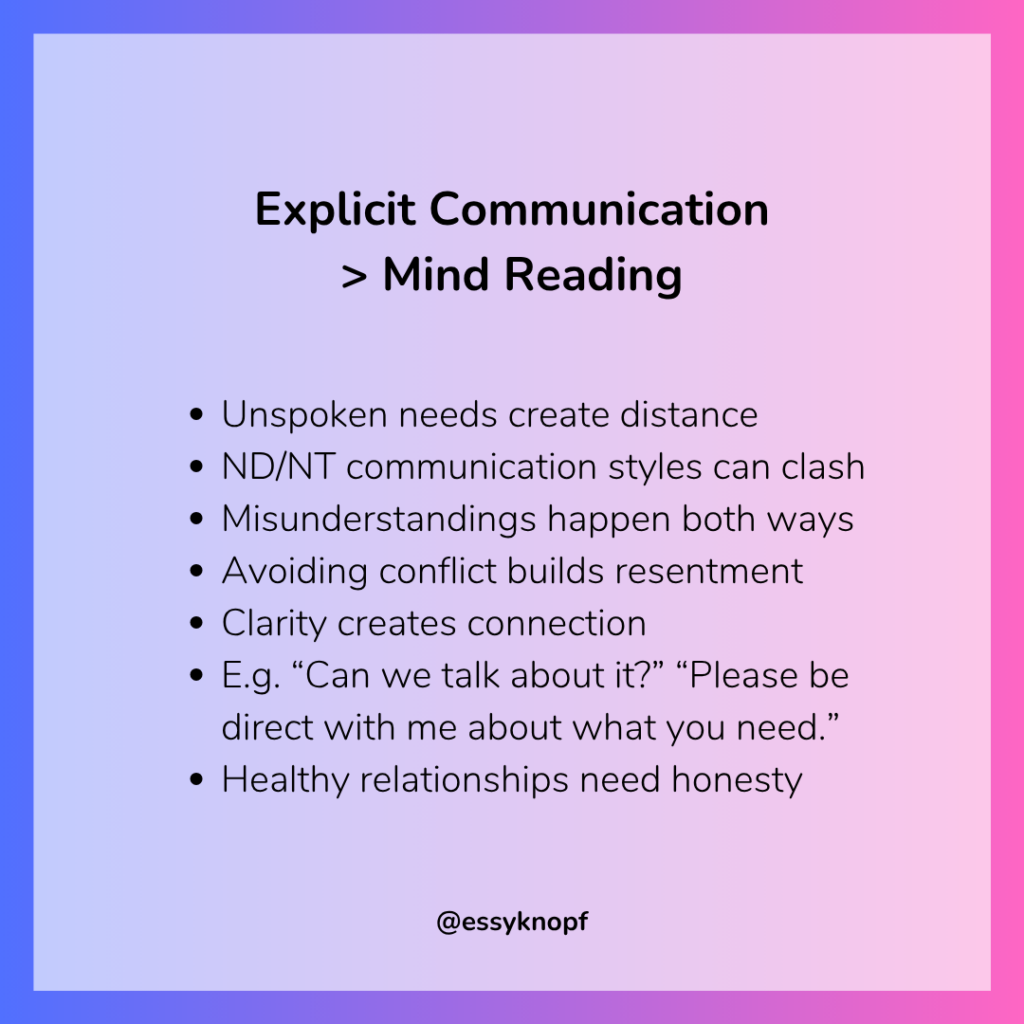
Through explicit communication, we can create enough clarity and safety that both people feel seen, heard, and emotionally understood.
Healthy relationships likewise often depend less on mind-reading and more on the willingness to communicate openly and compassionately. The conversations we avoid are sometimes the very ones that could bring us closer together.
Have you experienced communication mismatches in relationships?
Essy Knopf is a therapist who likes to explore what it means to be neurodivergent and queer. Subscribe to get all new posts sent directly to your inbox.
© 2026 Ehsan "Essy" Knopf. Any views or opinions represented in this blog are personal and belong solely to the blog owner and do not represent those of people, institutions or organizations that the owner may or may not be associated with in professional or personal capacity, unless explicitly stated. All content found on the EssyKnopf.com website and affiliated social media accounts were created for informational purposes only and should not be treated as a substitute for the advice of qualified medical or mental health professionals. Always follow the advice of your designated provider.