The neurodivergent passion cycle: Why you burn bright, then burn out

Essy Knopf neurodivergent passion cycle
Reading time: 9 minutes

You’re sitting at your desk, flicking between tabs like they owe you something. Your phone is in your hand, but you can’t remember why.

The day feels slippery; nothing’s sticking. You’re restless, underwhelmed, and oddly tired for someone who hasn’t really done anything yet.

This is how it starts.

Before the obsession. Before the deep dive. Before the notebooks and the color-coded spreadsheets and the midnight Amazon orders, there is the ache. The stillness.

The weird, itchy emptiness that signals you’ve entered the first phase of what I call the neurodivergent passion cycle.

I’ve seen it in my clients, my community, and in myself again and again: this pattern of losing momentum, finding a spark, diving deep, and eventually drifting away.

And while it can feel confusing or even shameful, it’s not a personal failing, but a cycle that many autistic and ADHD folks move through naturally.

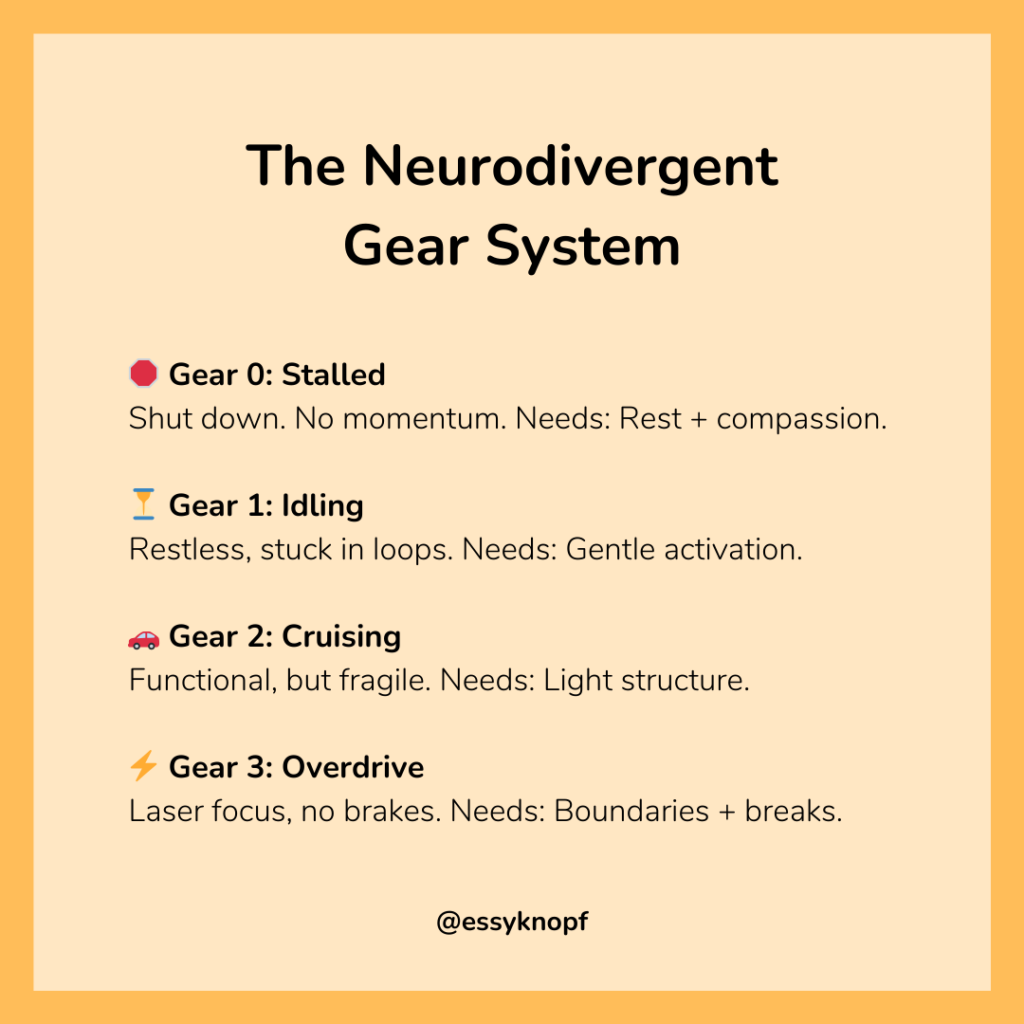
Phase 1: The Void

The first phase is The Void.

This is the emotional version of static. You might feel disconnected from your interests, your goals, even your identity. Tasks that once felt doable now feel slippery or irrelevant. Routines feel empty.

You scroll, you pause, you open tabs and close them again. You wonder: Is something wrong with me?

The Void is the reset before the re-ignition. The lull before the spark. A low-tide moment in the neurodivergent passion cycle, when your brain is scanning for something meaningful enough to matter again.

Phase 2: The Spark

Sometimes it’s a 2am rabbit hole on YouTube. Sometimes it’s a random conversation, a podcast episode, or a stray sentence in a book. Sometimes it’s nothing more than a vague flicker of interest that slowly intensifies.

But in a moment—however subtle—it clicks.

This is The Spark, the second phase of the neurodivergent passion cycle. And when it hits, it feels like oxygen after too long underwater.

Suddenly, something cuts through the fog. A topic, idea, or project presents itself and your brain lights up.

For many neurodivergent folks—especially those with ADHD or autistic wiring—the energy returns. The boredom lifts. You feel like you’ve re-entered your own life.

You might feel giddy, focused, even relieved. You might also feel a little frantic. The desire to act right now is real, because if you don’t, the spark might vanish. And you know what it’s like to lose a spark before it fully catches.

So you chase it.

You start a new note on your phone. You bookmark ten tabs. You scribble ideas in a notebook or voice-memo your thoughts while brushing your teeth. And maybe for the first time in days, weeks, or months, you feel genuinely alive again.

This phase of the neurodivergent passion cycle often gets mistaken for impulsivity. While others might see it as “just a passing interest,” for you, it feels like a possible identity. A calling. A new chapter. Even if it lasts only a little while, it matters.

But here’s the thing no one tells you: The Spark isn’t supposed to last forever.

Its job is to pull you out of The Void. To give you something to follow. Something to care about again. It’s the beginning of a story, and whether it becomes a long-term love or a short burst of joy, it deserves your attention.

So chase it. Let it burn bright. And know that it’s okay if you’re already dreaming big.

Because for neurodivergent brains, this is what it means to be in motion again.

Phase 3: The Deep Dive

You’ve followed the spark, and now you’re all in.

You’re devouring everything you can find. Articles. Podcasts. Reddit threads. Tutorials. Books. Product reviews. Academic journals you swore you’d never read again. Your browser history has a theme now. Your search bar knows your new obsession by name.

Welcome to The Deep Dive, the third phase of the neurodivergent passion cycle. This is where the energy shifts from curiosity to immersion.

And if you’re autistic or ADHD (or both), you might know this feeling intimately. It’s the sense of being lit up from the inside, of your thoughts aligning into something clear, vibrant, and hyper-focused.

All friction disappears. Executive functioning improves. You feel more capable, more organized, more you.

For autistics, this often resembles the early stages of a new passion. There’s structure here, logic, clarity. It brings peace. For ADHDers, this is hyperfocus at its most exhilarating.

This part of the neurodivergent passion cycle can be incredibly productive. You might be creating, building, learning, even teaching. The outside world starts to fade into the background. Your routines reorganize themselves around the interest. Time becomes slippery.

Sometimes you skip meals without noticing. Sometimes you stay up all night and wake up energized. Sometimes you get labeled “obsessive” or “intense.” But to you? It just feels necessary.

But there’s a caveat: in this phase, you can also start to disappear.

You might start canceling plans. Ignoring texts. Ghosting group chats. You do this because the outside world suddenly feels like an interruption. You’re busy building something. You’re becoming someone.

You may even begin to reshape your identity around this thing. “I’m a writer now.” “This is my path.” “This is who I’m supposed to be.” And in that moment, you mean it.

So let yourself go deep. Build, explore, create, become.

Phase 4: The Commitment

You’ve done the research. You’ve gathered the tools. You’ve built routines, created systems, maybe even reshaped your schedule to make space for this thing.

This is The Commitment phase—the fourth stage of the neurodivergent passion cycle. And it feels big.

You’ve moved from idea to identity. From hobby to habit.

You buy the higher-end version of the gear. You sign up for the class, the webinar, the certification.

You start telling people: “This is really important to me.” “This is who I am now.” “I think I’ve found it.” And maybe… you have.

For many neurodivergent people, we’re imagining a future where this interest becomes a path, a purpose, a way forward.

But here’s where things start to shift.

Because the moment you declare something—whether out loud, online, or even just to yourself—it becomes more than joy. It becomes responsibility.

You’ve claimed it. Now you have to keep it.

And for autistic and ADHD folks who’ve often struggled with consistency (or been shamed for perceived inconsistency), this can bring up anxiety.

The internal monologue starts whispering: “Don’t ruin this.” “Don’t drop it like the last one.” “You said this mattered. Now prove it.”

Even if no one else is pressuring you, you might start pressuring yourself. The initial spark of joy begins to carry weight.

Because the moment something becomes a “thing,” it feels like there’s something to lose. And with that comes rigidity. Perfectionism. Fear of messing it up.

For autistic folks, especially, there may be a deep desire to maintain structure and protect the routine that’s now built around this interest. For ADHDers, there may be a sudden urgency to “make it work” before motivation fades.

It’s still exciting, yes. Still meaningful. But a subtle tension is building.

Phase 5: The Plateau

At first, you don’t even notice it.

You sit down to work on your project, revisit your interest, or re-enter that creative flow… and something feels just a little off.

This is The Plateau, the fifth phase of the neurodivergent passion cycle.

From the outside, everything still looks the same. You’re still “doing the thing,” at least occasionally. You still talk about it. You still want to feel excited. But the effortless momentum you once had has starts to become more effortful.

For ADHDers, this might feel like the dopamine supply has been cut off. The novelty is gone. You’ve absorbed the basics. Mastered the structure. The learning curve has flattened, and with it, your motivation.

For autistics, it might feel more like sensory fatigue or cognitive saturation. The thing you loved may have required more emotional or mental energy than you realized. Now, that cost is catching up. And the scaffolding that held up your routines starts to wobble.

This phase can be incredibly disorienting. You may feel stuck between two realities: the excitement that was, and the numbness that is. And in this in-between space, shame loves to sneak in.

“Why can’t I get back into it?” “What happened to all that motivation?” “This always happens to me.”

The neurodivergent passion cycle often brings us to this juncture, where the joy fades, but the pressure remains. And because this phase rarely gets talked about, many of us misinterpret it as personal failure.

But let’s be clear: The Plateau is not failure. It’s the natural downshift after a surge of focus and engagement. It’s a signal that your brain is transitioning. Rebalancing. Resting. Searching.

What makes this phase harder is our instinct to force our way through it.

We make rigid plans. We double down on structure. We try to reignite the old fire with sheer willpower. And sometimes it works…for a while. But often, we’re just postponing the inevitable.
Essy Knopf neurodivergent passion cycle

Phase 6: The Drop

You stop.

Not necessarily all at once. At first, it might look like a few skipped days. A tab you stop reopening. A tool you leave untouched on your desk. A message you meant to reply to—and didn’t.

Then suddenly, it’s been a week. Two weeks. A month. And you realize: you haven’t gone back.

This is The Drop, the sixth and most emotionally fraught stage of the neurodivergent passion cycle. Something that once made you feel alive has collapsed, leaving you with a sense of loss that can be sharper than most people realize.

You might look at the supplies you bought, the plans you made, the hours you invested, and feel a pang in your chest.

You start thinking things like: “Why do I always do this?” “Was it ever even real?” “What is wrong with me?”

The Drop often hijacks your self-worth.

For ADHDers, the crash can feel like emotional whiplash. You were finally focused, finally functioning, and now that clarity is gone. And with it, the version of yourself you liked.

For autistics, especially if the interest was deeply tied to routine or identity, the drop can leave you feeling unmoored. The structure collapses. The interest fades. The days lose shape. You might even start to question who you are without it.

And perhaps worst of all: the inner critic arrives. Loud. Familiar.

It reminds you of every unfinished project, every abandoned plan, every time someone called you “flaky” or “all over the place.”

You hear the echoes of teachers, parents, coworkers, partners: people who didn’t understand how your brain works.

Now their voices live in your own head. This is where internalized ableism shows up at full volume.

Shane tells you that your inconsistency makes you untrustworthy. That your shifts in energy make you immature. That your passions don’t count unless they last forever.

But none of that is true.

If you’re here, in The Drop, I want you to hear this clearly: Your spark was real. Your joy was real. Your momentum mattered. And the fact that it faded doesn’t erase any of that.

This is not the end of the story. It’s the space before the shift.

Phase 7: The Shift

There’s no grand reawakening. No big announcement. No Instagram-worthy comeback.

Just… a thought. A video that holds your attention a little longer than it should. A topic that makes your chest feel warm. A casual mention that leaves a trail of tabs open.

If you don’t find yourself returning to the Void, you may instead enter the Shift, the final (and first) phase of the neurodivergent passion cycle. The moment the wheel begins to turn again.

It’s subtle. Easy to miss if you’re still stuck in the shame spiral of The Drop. Your conscious mind might still be licking its wounds, replaying stories of failure or inconsistency. But your is already scanning. Already searching for what’s next.

This is the part of the cycle most often buried under self-doubt.

We tell ourselves: “I’m not allowed to start something new until I finish what I already failed.” “I always do this. What’s the point?” “Why bother if I’m just going to lose interest again?”

What’s important to recognize is that you are wired to seek. To scan. To latch onto what’s meaningful, rich, and alive. It’s how your brain reengages with the world on your terms.

For autistic and ADHD folks, The Shift is where hope returns. It represents a return to motion. To possibility. To curiosity.

That’s the gift of the neurodivergent passion cycle. It loops. It pulses. It resets.

And each time you come around again, you don’t start from zero. You start with the knowledge, growth, and insight that every past passion gave you; even the ones that felt unfinished.

What you built still mattered. What you felt was real. What you created exists.
You are not flaky. You are a seasonal creature living in a linear world.

And The Shift is your invitation to begin again, perhaps with less pressure, and more self-trust.

You don’t need to justify it. You don’t need to explain it. You just need to notice it—and allow it.

Final Thoughts

If you’ve ever lit up with a new passion, poured yourself into it, and then felt the quiet grief of watching it fade… this post was for you.

The neurodivergent passion cycle is not a glitch. It’s not evidence of failure, immaturity, or inconsistency. It’s a rhythm. A process. A deep internal pattern that so many autistic and ADHD people experience, but few are ever taught to recognize, let alone honor.

You don’t move through life in straight lines. You move in pulses. Like tides. Like seasons. Like breath.

And when you understand your cycles—when you learn to name them, trust them, work with them instead of against them—you begin to find something deeper than discipline or “follow-through.”

You find self-respect.

You begin to say: “I’m in The Void. I’m resetting.” “This is The Spark! Let’s follow it.” “Ah, the Plateau. No need to panic. Just time to pause.”

“The Drop hurts, but it’s not the end.” “The Shift is here. I’m ready to begin again.”

This is not about “fixing” the cycle. It’s about recognizing that there was never anything broken to begin with.

You don’t owe anyone permanence. You don’t owe consistency that comes at the cost of your joy.

You owe yourself grace. Curiosity. Permission to follow what lights you up, even if it’s only for a season.

Because that’s where your magic lives.

Have you experienced this cycle? What phase are you in right now?

Struggling to self-organize? The neurodivergent gear system might be why

Essy Knopf neurodivergent gear system
Reading time: 8 minutes

Ever had a day where your brain simply refuses to cooperate?

You’re sitting in front of your to-do list, willing yourself to get started, but instead, you’re doomscrolling, staring at the wall, or bouncing between five half-finished tasks.

Then, the next day? You’re a whirlwind of productivity. Laundry’s done, inbox zeroed, meals prepped, water consumed. You feel clear, capable, maybe even unstoppable.

Same brain. Completely different state.

If you’re autistic, ADHD, or both, you likely know this cycle all too well. And you’ve probably internalized some painful messages about it: “Why can’t I just do the thing?” “Why am I like this?” “Everyone else seems to function just fine.”

While typically it’s described as a problem related to lack of motivation, discipline, willpower, or time management, it’s about dopamine regulation, executive functioning, and the way your neurodivergent brain shifts gears. Enter: the neurodivergent gear system.

This is a framework I use to explain the different mental states we cycle through. Each “gear” represents a unique mix of energy, focus, mood, and executive function. Learning to recognize what gear you’re in is the first step toward moving through your day with more self-compassion and less shame.

Because when you understand how your brain operates, you stop asking, “What’s wrong with me?”
And start asking, “What kind of support do I need right now?”

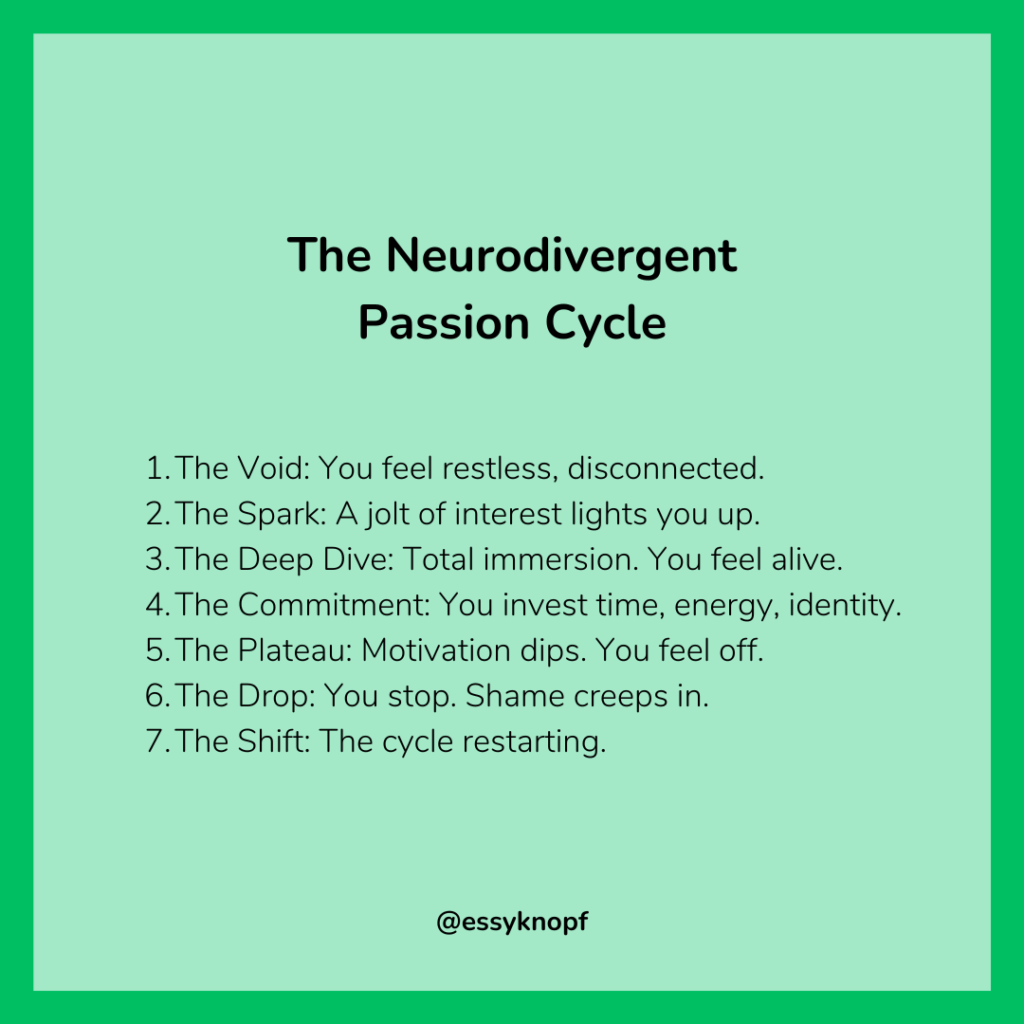
Gear 0: Stalled

Imagine trying to start a car with no fuel. You turn the key, press the gas, but nothing happens. That’s Gear 0: the Stalled state.

The lights are on, but nobody’s home. The idea of doing even one small task—brushing your teeth, replying to a text, making food—feels completely out of reach.

And worst of all? You don’t know how to get unstuck.

What Gear 0 Feels Like

  • Emotional numbness or shutdown
  • Anxious paralysis or depressive fog
  • Overwhelm at even the smallest responsibilities
  • Shame, guilt, or a loop of negative self-talk
  • A sense that time is passing, but you can’t start

From the outside, Gear 0 might look like procrastination. But inside, it’s more like internal collapse. For many neurodivergent folks, this state is chronic.

And in a society that values constant output, stalled can feel unforgivable.

Why This Happens

In Gear 0, dopamine is low, executive functioning is offline, and your nervous system may be in freeze mode. You may want to act, but your brain and body are in full shutdown.

You might hear yourself saying: “What is wrong with me?” “Why can’t I just get up?” “Everyone else manages. Why can’t I?”

But those questions are grounded in neuronormative expectations. The neurodivergent gear system reframes this experience not as failure, but as a biological state that requires care, not punishment.

How to Support Yourself in Gear 0

Gear 0 doesn’t respond to logic, pep talks, or productivity hacks. It responds to compassion and tiny sparks of activation.

Wiggle your fingers. Stretch one arm. Open a window. The smallest action is still movement. Try weighted blanket, soft textures, calming sounds, safe smells—anything that brings comfort to your nervous system. Or ask yourself: “What would help a little right now?” instead of “What should I be doing?”

And if nothing helps? That’s okay too. You’re not lazy. You’re not broken. You’re stalled. And stalled engines need time, fuel, and kindness to restart.

Gear 1: Idling

You’re not frozen anymore, but you’re definitely not going anywhere. Welcome to Gear 1: the Idling state.

The engine is technically running, but you’re stuck in neutral, buzzing with restless energy, yet unable to translate that into motion. You want to do something, anything, but your brain won’t cooperate. So you bounce from tab to tab, room to room, task to task… accomplishing exactly nothing.

This is the torture chamber of executive dysfunction. And it’s exhausting.

What Gear 1 Feels Like

  • Restless, jittery, uncomfortable in your own skin
  • Too anxious to relax, too foggy to focus
  • Aware of your responsibilities, but unable to begin
  • Constantly distracted, abandoning one task for another
  • Loud inner critic, whispering: “You’re wasting time.”

Sound familiar?

You might start to pay a bill, then remember an email, then open your calendar, then look up new planners… and boom, 45 minutes have vanished and nothing’s actually done.

What’s Actually Happening

In Gear 1, your brain is seeking dopamine but not finding enough of it to initiate or sustain meaningful action. So it chases micro-hits: scrolling, snacking, fidgeting, YouTube rabbit holes.

This is your brain trying to self-regulate with whatever stimulation it can find.

It’s frustrating. It’s confusing. And it’s where shame likes to sneak in the side door: “You had time. Why didn’t you use it?” “You’re so disorganized.” “You’re doing this to yourself.”

That shame? It keeps the cycle going.

The neurodivergent gear system teaches us to recognize this state not as a moral failure, but as a mismatch: you have the intention to act, but not the neurochemical bridge to get there.

How to Support Yourself in Gear 1

The key is gentle activation, not forcing productivity.

Try:

  • Body doubling: Work alongside a friend (in person or virtually)
  • Timers: Try “just five minutes”—even one minute counts
  • Permission to start messy: Skip perfection. Begin in scraps.
  • External structure: Lists, sticky notes, or soft deadlines can anchor your drifting mind

And remember: the goal isn’t to leap to Gear 3. It’s to inch from 1 to 2. From scattered to slightly engaged. Even a tiny shift matters.

Gear 2: Cruising

Something clicks. You’ve taken that first step. Maybe you’ve brushed your teeth. Opened the document. Replied to that one email. And suddenly, you’re in it.

Welcome to Gear 2: the Cruising state. This is where things feel… okay. Not amazing. Not terrible. But doable. There’s just enough dopamine to get through tasks, and just enough focus to keep the momentum going.

It’s functional focus. And for many neurodivergent folks, this gear is the sweet spot.

What Gear 2 Feels Like

  • You’re moving steadily through tasks, maybe even enjoying them
  • You still get distracted, but not derailed
  • You’re managing your energy (barely), but you’re in motion
  • Your mood might be flat, neutral, or cautiously optimistic
  • You feel “like yourself” again. Just… more fragile

It’s the gear where you realize: “Oh. I’m not broken. I’m just a person who needs different conditions to function.”

The Delicate Balance of Gear 2

The neurodivergent gear system identifies Gear 2 as a transitional state. You’re no longer stuck, but you’re not fully locked in. It’s like cruising at a safe speed down an empty road, but knowing one red light, one interruption, one loud noise… could send you back to Gear 1 or even stall you out.

That makes this the perfect moment to support your state, so you can keep going without tipping into burnout or distraction.

How to Support Yourself in Gear 2

This is not the time to load your plate with high-stakes tasks. Instead, sustain the rhythm with just enough structure and support.

Try:

  • Loose plans: A simple “next few steps” list, instead of a rigid schedule
  • Soft accountability: Check-ins with a friend, or co-working platforms like Focusmate
  • Lean into flow: If you’re vibing with a task, ride the wave, even if it’s not the “most important” thing on your list
  • Hold space for breaks: Don’t wait for burnout. Rest before you need it

Also, be mindful of the inner critic that loves to whisper: “This isn’t real productivity.” “You’re not doing enough.” “You’re barely keeping up.”

Don’t let that voice steal your progress. Gear 2 is where sustainable momentum lives.

Gear 3: Overdrive

You’re in the zone. Ideas are flowing, tasks are flying off your list, time is melting away, and everything just clicks. You feel competent, confident… even euphoric.

This is Gear 3: Overdrive.

It’s the state that every productivity guru seems to worship, and the one many neurodivergent folks wish they could live in forever. Because here? You finally feel like you’re functioning the way everyone expects you to function all the time.

But here’s the thing: Gear 3 isn’t sustainable.

What Gear 3 Feels Like

  • Laser-focused attention, possibly to the point of forgetting to eat, drink, or rest
  • High energy, fast thinking, and a sense of “flow”
  • Creative breakthroughs, fast problem-solving, intense clarity
  • A strong urge to finish everything while the momentum lasts
  • A total disregard for time, physical needs, or future burnout

Overdrive can feel amazing. That’s why it’s so seductive. Especially for ADHDers, this is the gear of hyperfocus, and it often comes with a rush of relief.

You’re finally “doing the thing.” You feel powerful. Capable. Normal.

Why Overdrive Isn’t the Goal

Let’s be clear: there is nothing wrong with experiencing Overdrive. But problems show up when we try to live here.

This gear is often triggered by:

  • Urgency (deadlines, last-minute pressure)
  • Novelty (new ideas, exciting projects)
  • Passion (deep interest or personal relevance)
  • Panic (avoidance catch-up, “everything’s on fire” mode)

The neurodivergent gear system reminds us that these bursts of energy are signs that your brain is flooded with just enough dopamine to lock on… for now.

But what comes up must come down. And if we don’t pace ourselves, Gear 3 will eject us hard into a crash.

Essy Knopf neurodivergent gear system

The Risks of Staying Too Long in Overdrive

We skip meals. Ignore fatigue. Cancel breaks. Delay rest. Push through red flags. Why?

Because we’ve been taught that this version of ourselves—the one that performs—is the real us. Everything else feels like failure.

So we tell ourselves: “I’ll rest later.” “I just need to get this one last thing done…” “This is the only time I’ve had this kind of focus. I have to take advantage of it.”

But this mentality leads directly to burnout. Overdrive without boundaries can thus become self-abandonment.

How to Support Yourself in Gear 3

The goal here is to honor it without losing yourself in it.

Try:

  • Set limits before you begin (e.g., “I’ll work for 90 minutes, then take a real break”)
  • Leave notes for Future You (sticky notes that say “Please rest. You deserve it.”)
  • Schedule body needs (hydration, food, movement) as non-negotiables
  • Watch for signs of mental fatigue: confusion, irritability, forgetfulness. Stop there, not two hours later

You’re not sabotaging yourself by slowing down. You’re protecting your ability to keep showing up tomorrow.

Because Gear 3 is a gift, but it’s not a place to live.

Essy Knopf neurodivergent passion cycle

Downshifting: The Crash After the Clarity

One minute, you’re flying: locked in, productive, present. The next? You’re staring at the screen, blinking slowly, completely disconnected.

What just happened? Welcome to Downshifting: the often-sudden, deeply disorienting transition out of one gear into a lower state.

For many neurodivergent people, this is one of the hardest parts of the cycle.

What Downshifting Feels Like

  • Brain fog settling in like a heavy mist
  • Emotional flatness, irritability, or inexplicable sadness
  • Losing your train of thought mid-task
  • Feeling mentally blank but physically wired, or vice versa
  • A sudden inability to care about the thing that had you so focused minutes ago

Downshifting can hit like emotional whiplash. You were fine—even thriving—and now you’re dazed, frustrated, or spiraling.

What’s Really Going On

When you’ve been in Overdrive, you’ve likely burned through a ton of dopamine, emotional energy, and executive function. Your brain reaches a tipping point and pulls the brakes for you.

You didn’t “ruin it.” You didn’t “lose momentum.” You didn’t “self-sabotage.” You simply ran out of fuel.

In the neurodivergent gear system, Downshifting isn’t a backslide. It’s a necessary transition: your brain trying to recover from a high-output state.

But because we often don’t get any warning signs, it can feel like a betrayal: “Why can’t I just keep going?” “I was doing so well. What changed?” “I must have done something wrong.”

And that’s where shame tries to take over, unless we name what’s really happening.

How to Support Yourself While Downshifting

The most important thing? Resist the urge to push through. Instead, focus on soothing your nervous system and resetting gently.

Try:

  • Name it: “I’m downshifting right now. I didn’t fail. I’m transitioning.”
  • Offer comfort, not correction: Cozy clothes, warm drinks, movement, silence. Whatever helps you reset
  • Embrace soft stops: Give yourself permission to stop without finishing. Not everything has to be done to be valuable.
  • Compassionate self-talk: “I worked hard. I need care now, not criticism.”

The neurodivergent gear system reminds us that even rest states are part of the cycle. The crash is a signal that your brain needs something different now.

Final Thoughts: Learning Your Rhythm

So… what gear are you in right now?

  • Are you stalled in Gear 0, unable to get moving and feeling swallowed by shame?
  • Idling in Gear 1, buzzing with restless energy but unable to act?
  • Cruising in Gear 2, functioning steadily and managing your pace?
  • Flying in Gear 3, riding the high of hyperfocus and finally feeling “on”?
  • Or maybe you’re downshifting, wondering where the focus went and why you suddenly feel so flat?

Wherever you are, it’s okay. You’re cycling through a neurodivergent gear system that reflects how your brain naturally shifts through different states of attention, energy, and regulation.

And when you learn to name those states, you also learn how to support them: Instead of “I’m lazy,” you say, “I think I’m in Gear 1. I need some soft structure.”

Instead of “I ruined my flow,” you say, “I’m downshifting. What would comfort look like right now?” Instead of “Why can’t I be like this all the time?” you say, “Gear 3 was a gift, but I don’t have to live there.”

This isn’t about becoming more productive or fixing yourself. It’s about honoring the rhythm of your neurodivergent brain, with curiosity instead of shame.

Because once you stop fighting your gears, you can start driving your own way.

What gear are you in today? Share in the comments. And if you have your own personal strategies for shifting gears (or staying gentle while stalled), I’d love to hear them.

Embracing the peaks, the valleys, and the power of spiky neurocognitive profiles

Essy Knopf spiky neurocognitive profiles
Reading time: 6 minutes

Have you ever found yourself feeling like two different people in the same day: hyper-focused and inspired one minute, frozen and unable to function the next? Maybe you can deep-dive into a topic with laser focus for hours, but forget basic things like eating, replying to a text, or what day it is.

If that resonates, there’s a good chance you’re living with what psychologists call a “spiky neurocognitive profile”, a term that might sound clinical, but describes a very real and human experience for many autistics and ADHDers.

Rather than having “evenly distributed” cognitive abilities across all areas, people with spiky profiles experience dramatic highs and lows. Think of it like a jagged mountain range: towering peaks of strength alongside valleys of challenge. These are indicators of a brain that processes the world in its own vivid, nonlinear, and deeply personal way.

This post is about naming that reality. Not to fix it. Not to flatten it. But to understand and embrace it with strategy, compassion, and pride.

Why “Spiky” Isn’t a Flaw

In a society that prizes “well-roundedness” and consistency, living with a spiky neurocognitive profile can feel like a constant mismatch. You might be told you’re “too sensitive,” “too intense,” or “not living up to your potential.” But the real issue is that the world wasn’t built for your kind of brilliance.

These profiles mean you can excel in certain areas. Perhaps you write with startling clarity, have a photographic memory, or intuitively understand systems and emotions. But you may also struggle intensely with executive function, sensory input, or navigating unspoken social rules.

This variability can be frustrating, especially when others only see your peaks and assume the valleys are laziness or lack of effort. But spiky neurocognitive profiles are less a design flaw than a different design altogether.

In fact, they reflect how many neurodivergent brains are wired to function. The peaks often show us where our values, interests, and deepest motivations lie. The valleys often point to where we need support, accommodations, or healing from environments that misunderstood us.

So instead of asking, “Why am I like this?” maybe we can start asking, “What is this trying to show me?”

The Gifts in the Peaks

For those of us with spiky neurocognitive profiles, the peaks are often areas where our brains light up, our confidence kicks in, and our sense of flow comes alive.

Autistics, for example, are often hyper-systematizers: deeply attuned to structure and patterns across a wide range of domains. This might show up in how we organize physical spaces, decode emotional dynamics, or pick up on language cues that others miss.

This connects with another peak: deliberative thinking. Many autistics process slowly and thoroughly. We don’t rush to conclusions; we sit with complexity, ask hard questions, and make decisions rooted in depth, not impulse.

Then there’s hyper-empathy, an often-overlooked peak in both ADHDers and autistics. You might feel someone’s sadness before they say a word. You might weep at commercials or carry the emotional residue of a friend’s pain long after the conversation ends.

And let’s not forget authenticity. Many of us—especially those who’ve stopped masking or never learned to—communicate with refreshing honesty. We tell it like it is because we value truth.

When nurtured, these gifts transform relationships, workplaces, and communities. But to fully harness them, we have to stop apologizing for them. We have to name them for what they are: gifts, not glitches.

The Weight of the Valleys

For every dazzling peak in a spiky neurocognitive profile, there’s often a corresponding valley; a space where things just feel stuck, heavy, or impossible.

Imagine trying to start a simple task—like sending an email or getting out of bed—but feeling like your body and brain are locked in place. You want to do the thing. You know it’s important. But the initiation switch just won’t flip. That’s executive dysfunction.

For ADHDers, this might look like chronic procrastination, time blindness, or bouncing between tasks without completing any of them. For autistics, it might show up as inertia; feeling trapped in a routine or frozen when a plan changes unexpectedly. Both profiles can lead to intense emotional fallout, especially when tasks pile up and shame kicks in.

And speaking of shame, valleys are often made heavier not by the experience itself, but by the story we tell about it. “I should be able to do this.” “Everyone else can.” “What’s wrong with me?” These thoughts are the voice of internalized ableism, echoing years of societal messaging that says productivity equals worth.

In environments that don’t understand spiky neurocognitive profiles, our valleys get misread—labeled as defiance, disorganization, irresponsibility. And when we’re told those labels often enough, we start to believe them ourselves.

We end up in a vicious cycle: hit a valley → blame ourselves → push harder → burn out → repeat.

Breaking this cycle starts with understanding: your valleys are not moral failings. They are invitations. Signals. Areas where your brain is asking for scaffolding, not shame.

And when those valleys are supported with compassion—internally and externally—they inform you. They help you understand how your brilliant, complex, nonlinear brain truly works.

The Role of Context

If you take nothing else from this post, let it be this: spiky neurocognitive profiles exist in context.

Imagine trying to thrive as a visual thinker in a noisy, chaotic office with constant interruptions. Or navigating a rigid school system as a multi-passionate ADHDer who learns best through movement and exploration. Now imagine being told your struggles in those environments are a personal failing. Sound familiar?

When your peaks are unsupported and your valleys are misunderstood, life starts to feel like one long uphill battle. But it’s not your brain that’s the problem—it’s the fit.

This is where the social model of disability comes in. It tells us that people are disabled by environments that fail to accommodate their brains and bodies. And that changes everything.

Because instead of asking, “Why can’t I function like everyone else?” we start to ask, “What would help me function like myself?”

For a sensory-sensitive autistic in a loud workspace, accommodations like noise-canceling headphones, soft lighting, or a private office can make the difference between survival and thriving.

For an ADHDer student, allowing assignments to be submitted in creative formats—or offering flexible deadlines—can unlock passion and performance that rigid systems suppress.

These are acts of equity that level the playing field so our actual abilities can shine.

But when accommodations are denied—or when we internalize the belief that we shouldn’t need them—we start contorting ourselves to fit the system. We mask. We overperform. We burn out. And the longer we do it, the more it chips away at our self-worth.

This is why understanding the role of context is so crucial. It lets us shift from blaming ourselves to advocating for ourselves.

So the next time you find yourself stuck in a valley or struggling in a space that doesn’t make sense, ask: Is it me? Or is it the room I’m being asked to perform in?

Often, the answer will be loud and clear: it’s the room.

Essy Knopf spiky neurocognitive profiles

Reclaiming Your Profile with Compassion

Once you begin to recognize that your brain is not broken—but different—the path forward changes. You stop trying to “fix” your spiky neurocognitive profile, and start learning how to live with it. That’s what reclaiming looks like.

It begins with reframing. Instead of seeing yourself as inconsistent, start seeing yourself as specialized. You have a brain that excels in specific domains and struggles in others, not unlike an elite athlete who dominates their sport but needs a coach, nutritionist, and physical therapist to function at their best.

Your needs aren’t extra. They’re real. And they deserve to be met.

Start asking yourself gentler, more curious questions:

  • Instead of “Why can’t I do this simple thing?”, try “What’s getting in the way for my brain right now?”
  • Instead of “I should be able to focus!”, ask “What does my focus need in this moment—novelty, structure, or rest?”
  • Instead of “I’m just not good at adulting,” try “What tools could help this part of adulting work better for me?”

Once you reframe, you can strategize with supportive scaffolding that honors your profile.

If you hyper-focus, build in guardrails like timers, hydration reminders, visual breaks. If you’re multi-passionate, give yourself permission to move through seasons. You don’t have to pick one forever thing. You just have to pick the next right thing.

If executive dysfunction trips you up daily, start externalizing your memory: sticky notes, visual checklists, recurring alarms, “launch pads” by the front door. Ask for body-doubling or gentle accountability.

And if you’re feeling the burn of internalized ableism—the voice that whispers, You’re just making excuses. You should be able to do more—pause. Breathe. Then say back: “I deserve to feel safe, even when I’m struggling.”

That’s how we begin to reclaim the narrative. We name the reality of our spiky profiles without shame. We meet our needs without apology.

Final Thoughts

Living with a spiky neurocognitive profile means carrying contrasts within you: being both wildly capable and deeply overwhelmed, often in the same day. It’s confusing, exhausting, and yes, sometimes painful.

The fact the world wasn’t designed for spiky brains means the systems around you need to grow. And as you start to understand your profile—where the peaks are sharpest, where the valleys dip lowest—you build a kind of inner map. A guide for thriving on your own terms.

Gradually, you can learn to honor the truth of how you function, how you flourish, and what you need to feel whole.

So if you take anything from this post, let it be this: your profile is a way of being that deserves care, not correction.

Do you recognize parts of yourself in this post? Do you experience the peaks and valleys of a spiky neurocognitive profile?

Why rejection sensitive dysphoria is a nervous system adaptation

Essy Knopf rejection sensitive dysphoria
Reading time: 10 minutes

Rejection sensitive dysphoria (RSD) is an experience many autistic and ADHD people know intimately, even if they’ve never had the words to describe it.

It’s that gut punch feeling when someone says, “Hey, can we talk later?” It’s the mental spiral that kicks off before you even open a message, your brain filling in the blanks with the worst-case scenario.

It’s the shame that rushes in after you interrupt someone, stumble on your words, or send a message and don’t get a reply right away.

These are patterned, practiced, and deeply wired emotional responses.

Rejection sensitive dysphoria anticipates rejection. It crouches in the background of your mind, scanning for any hint that you might be in trouble: socially, emotionally, relationally.

It exists, I believe, because your nervous system has learned through experience that even small cues can lead to big pain. So now it prepares in advance. It braces. It overcorrects. It shuts down or explodes, trying to manage the threat before it fully lands.

And that “threat” can be as subtle as a short reply, a change in someone’s tone, a pause that feels just a little too long. The result? Your whole system goes on red alert.

You might freeze and go silent. You might start apologizing for things you haven’t even done.
You might talk too fast, over-explain, or withdraw completely.

Some people get angry, preemptively defending themselves before they’ve even been accused of anything.

But all of it—the shutdowns, the spirals, the overreactions—is your nervous system doing what it’s been trained to do: survive social danger.

Why Does Rejection Sensitive Dysphoria Happen?

Rejection sensitive dysphoria doesn’t come out of nowhere.

You don’t just wake up one day suddenly afraid of being misunderstood, criticized, or “too much.” That sensitivity? That bracing-for-impact feeling? It’s learned. Layered. Shaped by dozens—maybe hundreds—of moments over time.

Especially for neurodivergent folks, that learning usually starts early. As children, many of us were asked, “Why are you like this?”

We were told to stop crying, stop talking, stop asking so many questions. We were called dramatic, sensitive, weird, difficult. Sometimes the words were harsh. Other times, it was just the tone. The sigh. The side-eye. The silence.

Those little moments of disconnection, especially when they came from people we relied on, added up.

When your nervous system doesn’t feel safe being fully seen, it learns to adapt. You start scanning for signs of disappointment before they’re even spoken. You rehearse what you’re going to say before saying it. You shrink in response to disapproval. You learn to apologize before you even know what you’re apologizing for.

You learn that visibility comes with risk, and that being misunderstood might cost you connection, belonging, or emotional safety.

This is especially true for autistic and ADHD individuals who grew up in environments that expected compliance, not curiosity. Who were taught to self-correct rather than be understood.

So your body begins to prepare. It sharpens its focus. It tightens your muscles. It quickens your heart. It tells you: “Watch out. Don’t mess up. Don’t be too much. Again.”

And that’s what rejection sensitive dysphoria really is: not a flaw in your character. Not an overreaction. But a nervous system that has internalized the expectation of being hurt, and is trying to get ahead of it.

The Impact of Structural Ableism

It’s important to stress that rejection sensitive dysphoria is not just about one hard conversation or one misunderstood comment, but about repeated exposure to a world that isn’t designed for your way of thinking, feeling, or communicating.

For neurodivergent people, structural ableism is the air we breathe. It’s everywhere, and often invisible to those who don’t experience it.

It shows up in classrooms that punish daydreaming instead of recognizing divergent attention. In workplaces that value speed over depth.

In social norms that expect eye contact, perfect timing, and just the right amount of emotional expression: not too much, not too little.

Even when we do our best to “pass,” we’re still often told we’re doing it wrong.

We’re called unprofessional for needing more processing time. Rude for being direct. Lazy for struggling with executive function. Too intense for showing passion. Too sensitive for naming how something hurt.

Over time, these microinjuries compound.

When you’re consistently met with misinterpretation or dismissal, you stop asking why the system is built this way. You start assuming you are the problem.

That’s how internalized ableism begins. You start to believe the judgment you’ve received. And eventually, you preempt it, rejecting yourself before anyone else has a chance to.

This is what makes rejection sensitive dysphoria so deeply painful: it often leaves us fighting the rejection after it’s taken root inside you.

It’s also why “just get over it” or “don’t take it so personally” is such an unhelpful response.

When the world has consistently told you your reactions are wrong—your way of being is wrong—it’s not just hard to bounce back. It feels dangerous to be fully yourself.

And so, many neurodivergent people begin to mask. Not because we’re trying to deceive others. But because we’re trying to survive inside systems that punish authenticity.

What Rejection Sensitive Dysphoria Can Look Like

Rejection sensitive dysphoria isn’t always obvious from the outside. It doesn’t have a single “look.” But on the inside, it’s almost always intense.

For some people, it hits like a shutdown. You’re mid-conversation, and suddenly you’re quiet. Frozen. Your brain starts looping through every word you just said, trying to spot what might’ve gone wrong. Your body is there, but your mind has exited the room.

Others go into overdrive. You feel cornered, even if no one has accused you of anything. You start overexplaining, trying to clarify every detail before you’re misunderstood.

You might get defensive, even panicky. You might interrupt, trying to fix something before you even know what it is.

And then there’s the spiral. You smile through it, nod politely, keep it together.

But later? You unravel. You reread a message twenty times, searching for proof that someone’s mad at you. You draft a reply, delete it, rewrite it. Maybe you don’t send it at all, and then obsess over your silence.

You ask yourself, Did I say the wrong thing Did I misread the tone? Are they annoyed with me? Was I too much?

And it doesn’t stop there.

You replay the whole interaction on loop, sometimes for hours. Sometimes for days.

This is what rejection sensitive dysphoria does to your nervous system. It hijacks it. It treats every unclear interaction like a pending disaster.

And the thing is, your brain can’t tell the difference between emotional pain and physical danger. So it launches a full fight/flight/freeze/fawn response over… an emoji. A pause. A neutral tone of voice.

This happens because you’ve been trained—often through real experience—to expect harm in moments like these.

And to protect yourself, you do what anyone would do: you avoid situations that might trigger more of it.

So you stop initiating conversations. You leave messages unanswered. You ghost creative projects, back out of job applications, cancel plans.

Or, you build elaborate mental systems to “prepare” for every outcome: scripting, rehearsing, people-pleasing, apologizing preemptively.

To an outside observer, it might look like you’re overreacting. But what’s actually happening is this:
Your system is responding to a lifetime of pattern recognition. It’s saying, “This might not be safe. Let’s not get hurt again.”

When Others Misunderstand What’s Really Going On

One of the most painful parts of living with rejection sensitive dysphoria is this: most people don’t see it for what it is. They see the reaction, not the reason behind it.

You say, “That felt hard for me,” and they respond, “You’re being dramatic.” You express anxiety, and they tell you, “You’re making something out of nothing.” You ask for clarification, and they accuse you of overthinking, or worse: being manipulative.

When your emotions are constantly dismissed or minimized, the message becomes clear: your way of feeling is unacceptable. Your needs are inconvenient. Your pain makes other people uncomfortable.

And if you grew up neurodivergent in an ableist world, you probably learned that message early.

We’re told that other people can handle feedback “just fine.” That we’re too sensitive. That we need thicker skin. That our feelings are the problem.

But rejection sensitive dysphoria isn’t a personal failing. It’s not immaturity, or narcissism, or attention-seeking. It’s not “making it about you.”

Again, it’s a nervous system trying to survive social injury in a world that hands out those injuries far too often to neurodivergent people.

In a culture that prizes stoicism, emotional control, and “toughness,” there’s very little room for complex emotions, especially when they come from those of us who don’t perform them in “acceptable” ways.

Which is why we start filtering. We tone ourselves down. We start asking permission to have the feelings we’re already having.

The Shame Spiral and the Voice That Isn’t Yours

When rejection sensitive dysphoria takes root, it starts to reshape how you respond to yourself.

You begin to question your own emotions. To second-guess every reaction. You wonder: Am I being too sensitive? Did I make that up? Was I the problem all along?

You start replaying conversations, dissecting yourself and your ever move. What did I do wrong? Why am I like this? Why can’t I just let things go?

This is the beginning of the shame spiral. And once it starts, it’s hard to stop.

You come to see a moment of discomfort, an unsuccessful exchange, a misstep, as a moral indictment. A character flaw.

And when that shame becomes chronic, we adapt in the only ways we know how. We shrink our personalities. We avoid authenticity. We apologize for having feelings. We mask.

And here’s the cruel twist: even when others aren’t judging us, that internal voice still is. We start policing ourselves on behalf of the people who hurt us.

We hear their echoes: “You’re overreacting.” “People won’t want to deal with this side of you.” “You’re exhausting.” “You always take things the wrong way.”

Even when someone gives you kind feedback, you still panic. Even when someone reassures you, you still spiral. Even when no one is mad… your body prepares for fallout. Because you’re still fighting rejection from within.

Essy Knopf rejection sensitive dysphoria

Softening the Spiral: Internal Strategies for Rejection Sensitivity

There’s no five-step hack to make rejection sensitive dysphoria disappear. And honestly, most of us don’t need fixing. We need understanding.

That begins with the most powerful internal shift:

Naming what’s happening.

Just being able to say, “This feels like rejection, and my body is on high alert,” is often enough to break the shame-spiral, even just a little.

You’re not imagining things. You’re not being weak. You’re having a patterned nervous system response, and it makes sense.

That awareness creates space. And in that space, you can ask yourself gentler questions: What am I afraid this moment says about me? What part of me is trying to protect me right now? What would I offer a friend feeling what I’m feeling? Can I allow the feeling without letting it take over the story?

We often think we need to analyze our way out of spirals. But the truth is, many of us need to feel safe enough first in our bodies.

That’s where regulation comes in.

For some, that means movement: walking, stretching, shaking out tension. For others, it’s breathwork, music, or soothing sensory input.

Other examples include using weighted blankets, compression gear, nature sounds, stimming in peace, and rocking, humming, holding a fidget.

Sometimes, it’s saying your thoughts out loud to someone who won’t try to fix them, just witness them.

The more you practice noticing your nervous system’s cues before the spiral goes too deep,
the more capacity you create to stay grounded when those rejection alarms go off.

And that? That’s real resilience.

Creating Safety in Connection: Interpersonal Support for RSD

Rejection sensitive dysphoria can be isolating.

Many of us have learned to brace for other people’s reactions. To anticipate invalidation. To expect criticism. And sometimes… we stop sharing altogether.

But the truth is, support can help. When someone meets our vulnerability with care instead of confusion, it changes everything.

So what does that look like?

If you care about someone who lives with RSD:

Don’t tiptoe, but do be clear and kind.

Vague statements like, “We need to talk,” “This isn’t working,” or “I have some feedback…” can send a rejection-sensitive nervous system into full-blown panic before the conversation even starts.

Try leading with reassurance and clarity: “Hey, I want to talk through something, but I want you to know upfront that I care about this relationship, and I’m not upset.” “There’s something I’d like to work on together. I want you to feel safe having the conversation.”

This isn’t coddling. It’s co-regulation. It helps the other person stay present enough to actually hear you.

And if someone does react strongly—by spiraling, shutting down, over-explaining, or seeming defensive—don’t assume they’re trying to manipulate the moment.

One of the most healing things you can do is affirm their experience without needing to debate it: “That makes sense, knowing what you’ve been through.” “You don’t need to justify your reaction to me.” “We’re okay—I’m not going anywhere.”

That kind of grounding helps us come back into connection.

And if you’re the one with rejection sensitivity?

You might find it hard to ask for this kind of support. Maybe you’ve been dismissed in the past. Maybe you’re afraid of seeming needy.

But you’re allowed to say: “Hey, I’m someone who’s sensitive to tone and ambiguity. When something’s up, it really helps if you can be direct but gentle.”

Or: “If we’re going to talk through something difficult, could you let me know upfront that you’re not angry? That helps my brain stay regulated.”

Or even: “I might get quiet or overexplain if I feel unsafe. I’m not trying to be difficult. It’s just how my nervous system protects me.”

You don’t have to apologize for needing clarity. You don’t have to feel ashamed for asking for reassurance. You don’t have to earn kindness.

Support works best when it’s mutual. We learn to regulate and self-advocate, while others learn to communicate with more care.

It’s Not Just You—It’s the System, Too

Rejection sensitive dysphoria is often treated like a personal flaw. Something to manage, fix, or hide. An emotional quirk that makes you hard to be around.

But let’s be clear: we don’t develop these responses in isolation. We learn them inside systems that reward emotional flatness, punish intensity, and treat neurodivergent expressions as problems to be solved.

And when you’re constantly navigating environments that see your sensitivity as weakness, your boundaries as overreactions, your requests as demands, it’s no wonder your nervous system stays on high alert.

So yes, there is personal work to do: learning regulation. Practicing self-trust. Untangling internalized shame. Reclaiming your emotional needs.

But that work doesn’t happen in a vacuum.

If the world around you keeps reactivating your pain… If institutions, families, workplaces, and even friends continue to interpret your sensitivity as dysfunction… It won’t matter how many coping strategies you master.

Because no amount of breathwork can override the harm of being repeatedly misunderstood. This is why healing from rejection sensitive dysphoria has to be a shared commitment.

We, as neurodivergent people, are already doing the labor: reflecting, adjusting, regulating, advocating. We need the people around us to meet us halfway.

We need systems that stop framing our pain as personality flaws. We need conversations that don’t weaponize feedback. We need emotional ramps the same way we build physical ones: simple, thoughtful, accessible.

This isn’t about walking on eggshells. It’s about treating emotional difference the way we treat any other form of human variation: with care, not control.

So if you live with rejection sensitivity, know this. Your reactions make sense. Your pain is valid. Your intensity is not a character defect. And your healing doesn’t have to be a solo journey.

Final Thoughts

If you experience rejection sensitive dysphoria, chances are you’ve just spent a long time adapting to an unsafe emotional world.

You deserve relationships that can hold your truth without making you feel broken for it.

Have you found ways to explain your sensitivity to others? What helps you feel safe during emotionally charged moments?

Has RSD shaped the way you connect, speak up, or show up?

When your brain hits “buffering”: Understanding SES bandwidth saturation in autistics and ADHDers

Essy Knopf SES bandwidth saturation
Reading time: 2 minutes

You’re talking to someone and suddenly can’t track what they’re saying. Or you’re bouncing between tabs, reminders, and conversations, and everything just… collapses.

If you’re neurodivergent (ND), this may be something more specific than stress. It’s what I call SES bandwidth saturation—a full system overload across your sensory, executive, and social processing capacities.

Like a Wi-Fi network clogged by too many devices, your brain starts buffering. Sometimes, it crashes altogether.

What Is SES Bandwidth Saturation?

Every brain has a limit to how much it can process. But ND brains often fill up faster—especially when bombarded by:

  • Sensory input – loud sounds, bright lights, uncomfortable textures
  • Executive demands – planning, switching tasks, making decisions
  • Social effort – decoding tone, facial expressions, and social cues

Even one of these can be tiring. Stack them up, and that’s when SES bandwidth saturation hits. You’re not “too sensitive.” You’re maxed out.

Warning Signs of Overload

Saturation doesn’t look the same for everyone, but it often leads to:

  • Overload – irritability, anxiety, or focus struggles
  • Shutdown – going quiet, spacing out, or not being able to speak
  • Meltdown – emotional overflow, like crying, yelling, or panic
  • Burnout – long-term fatigue, numbness, or loss of motivation

This isn’t weakness—it’s your brain asking for relief.

Daily Life, Derailed

Let’s say you’re in a noisy café, trying to follow a conversation. You’re not just listening. You’re also filtering background noise, processing what’s being said, and keeping track of facial cues. That’s SES bandwidth saturation in action.

Or maybe you’re trying to finish a work task, but Slack pings, emails, and a surprise meeting derail your focus. Your executive bandwidth is spent before you even start.

The Hidden Cost: SES Debt

Even when you’re “holding it together,” you might be accumulating SES debt—a slow drain on your system that builds up over time.

Just like financial debt, if you don’t make regular deposits back into your energy reserves, eventually you hit zero.

Rebuilding Bandwidth: Strategies That Work

? Quick Restorative Practices

  • Micro-breaks between tasks
  • Noise-canceling tools for sensory downtime
  • Intentional pauses between social events

? Long-Term Recovery

  • Planned decompression – quiet weekends or tech-free evenings
  • Cognitive offloading – use to-do apps, alarms, sticky notes
  • Reclaim your rhythm – schedule breaks before you need them

Beyond Coping—Toward Recovery

Coping helps you survive the moment. Recovery helps you reset.

Scrolling endlessly or caffeinating through the day might seem helpful, but they won’t replenish your SES bandwidth. What will? Rituals of genuine rest. Boundaries that protect your capacity. And knowing it’s okay to say no.

Build a Bandwidth-Conscious Life

  • Ask for accommodations—even if it feels uncomfortable
  • Choose ND-friendly environments where possible
  • Make self-care non-negotiable—not a reward, but a requirement

Final Thoughts

You don’t have to “earn” rest. SES bandwidth saturation is real—and it deserves your attention. Recognizing the signs early is the first step toward sustainable self-care and avoiding burnout.

Does this sound familiar? How do you notice SES bandwidth saturation in your life—and what helps you recover?

Introducing DANDORI: A productivity system for neurodivergents

Essy Knopf DANDORI executive functions
Reading time: 3 minutes

For many autistics and ADHDers, daily life is like trying to juggle too many balls at once—except those balls are constantly changing shape, and some vanish the moment you reach for them. Executive dysfunction makes it hard to organize, prioritize, and complete tasks, leading to frustration and a feeling of being stuck.

Common struggles include:

  • Knowing what needs to be done but struggling to start (task initiation issues)
  • Hyperfixating on one task while ignoring everything else (time blindness)
  • Forgetting appointments, deadlines, or important responsibilities (working memory challenges)
  • Feeling overwhelmed by big tasks because breaking them down seems impossible (task chunking difficulties)
  • Struggling with transitions or shifting focus between activities (attention-switching issues)

The world often expects neurodivergents to simply “try harder,” but effort alone isn’t enough when the brain’s executive functions work differently. Instead, structured strategies—designed with neurodivergent needs in mind—can create pathways to success. Enter the DANDORI system.

Introducing DANDORI: A Productivity System for Neurodivergents

DANDORI is a structured framework for improving executive function. Borrowing from a Japanese term meaning “procedure for carrying out a plan,” DANDORI helps break tasks into manageable steps, boost motivation, and increase accountability. Each letter in DANDORI stands for a key principle:

D – Do More, Keep Busy (With Intention)

For many neurodivergents, motivation swings between extremes—either hyperfocus or complete inertia. By balancing activity levels, we can regulate motivation more effectively. Strategies include:

  • Chunking: Breaking tasks into smaller, achievable steps to reduce overwhelm.
  • Task Batching: Grouping similar activities together (e.g., answering emails in one session) to improve efficiency.
  • Active Transitioning: Using short physical activities (e.g., stretching, walking) between tasks to maintain momentum.

A – Accountability

Having external accountability structures can make all the difference when motivation wanes. Some ways to maintain accountability include:

  • Using Habit-Tracking Apps: Apps like HabitShare allow you to log progress and even involve friends in your goals.
  • Body Doubling: Working alongside a friend (virtually or in-person) can help increase focus and follow-through.
  • Public Commitments: Sharing your goals with a trusted person can create a sense of responsibility and increase follow-through.

N – Nurture Motivation (Success Stacking)

Motivation thrives on small wins. By creating early successes, we can build momentum and confidence. Strategies include:

  • Success Stacking: Starting with small, easy tasks before tackling harder ones.
  • Rewarding Progress: Giving yourself incentives (e.g., a break, a snack, or watching a favorite show) after completing tasks.
  • Pomodoro Technique: Working in 25-minute focus sprints followed by 5-minute breaks to maintain motivation.
Essy Knopf DANDORI executive dysfunction

D – Define Goals

Clear goals prevent tasks from feeling overwhelming and directionless. Tools to help with goal-setting include:

  • The Eisenhower Matrix: Categorizing tasks based on urgency and importance.
  • SMART Goals: Ensuring goals are Specific, Measurable, Achievable, Relevant, and Time-bound.
  • Reverse Planning: Working backward from a deadline to map out necessary steps.

O – Optimize Tracking & Organization

Creating an organized system minimizes cognitive overload. Some helpful approaches include:

  • Numbered Folders & Labels: Keeping digital and physical spaces structured.
  • Task Boards & Planners: Using tools like Trello, Notion, or a simple bullet journal to track progress.
  • Automated Reminders: Setting up notifications for tasks and deadlines.

R – Remind Yourself

Memory aids are crucial for managing executive dysfunction. Strategies include:

  • Using Sticky Notes & Whiteboards: Placing visible reminders in key areas.
  • Voice Notes & Digital Assistants: Recording quick notes or using smart home devices for reminders.
  • Visual Timers & Clocks: Displaying countdowns for task completion.

I – Implement Time Management

Neurodivergent time perception can be inconsistent, making it essential to develop time management techniques:

  • Time Blocking: Allocating fixed time slots for specific activities.
  • Flexible Scheduling: Allowing buffer time between tasks to accommodate energy fluctuations.
  • Gradual Adaptation: Starting with shorter work periods and increasing as focus improves.

Final Thoughts

No system works perfectly for everyone, so it’s essential to tailor these strategies to your unique needs. Be flexible, experiment, and most importantly, practice self-compassion. The key to managing executive dysfunction isn’t perfection—it’s persistence.

Would you try the DANDORI system? What strategies have worked for you? Share your thoughts in the comments below!

We need ADHD medication parity NOW

Essy Knopf ADHD medication
Reading time: 2 minutes

Accessing ADHD medication isn’t just about filling a prescription—it’s a constant battle. Unlike many other mental health challenges where medications are more readily available, ADHD medication is burdened with extra hoops to jump through. These barriers disproportionately affect those who rely on stimulant medications, leaving many without the treatment they need to function.

The process is exhausting: prior authorizations, frequent refill requirements, and the stigma surrounding stimulant medications all contribute to the problem. Add to that the ongoing stimulant shortage, and what should be a simple, routine healthcare matter becomes a frustrating and even disabling ordeal.

ADHD Medication Shortages: A Crisis with No End in Sight

For several years now, the U.S. has been experiencing a shortage of medication like Adderall and Ritalin. The reasons are complex, involving manufacturing limits, increased demand, and regulatory constraints. But the outcome is simple: ADHDers are left scrambling to find their prescribed medication, often having to switch to alternatives that may not work as well or even going without entirely.

Imagine needing medication daily to function, only to be told month after month that your pharmacy is out. For many, this can lead to worsened executive dysfunction and a severe drop in quality of life.

Insurance and Prescription Barriers

Even when ADHD medication is available, insurance restrictions can create additional roadblocks. Many ADHDers must navigate:

  • Prior authorizations, where doctors have to prove the necessity of ADHD medication before insurance covers it.
  • Quantity limits, requiring multiple pharmacy visits for a single prescription.
  • Frequent reassessments, even for adults who have had a stable diagnosis for years.

These barriers assume that ADHD medication is inherently more dangerous or prone to abuse than other mental health treatments, reinforcing stigma and making care unnecessarily difficult.

The Call for ADHD Medication Parity

Other mental health conditions do not face these same restrictions. If someone with anxiety, depression, or bipolar disorder can access their medication without excessive red tape, why should ADHDers be treated differently?

Parity means equal treatment. It means that ADHD medication should be covered and dispensed as easily as any other psychiatric medication. It means that stimulant shortages should be taken seriously as a public health issue, not dismissed as a minor inconvenience.

Essy Knopf ADHD medication access challenges

What Can We Do?

The fight for ADHD medication parity starts with awareness and advocacy. Here’s how we can push for change:

  • Call on policymakers to enforce parity laws and remove unnecessary restrictions on ADHD medication.
  • Raise awareness about the impact of ADHD medication shortages and advocate for improved pharmaceutical regulations.
  • Support ADHD advocacy organizations that work to improve healthcare access for neurodivergents.

Final Thoughts

If you’ve struggled to access ADHD medication, you’re not alone. It’s time for healthcare systems to recognize ADHD as a legitimate medical challenge deserving of equal treatment. Let’s demand ADHD medication parity—because no one should have to fight this hard for basic care.