

Asking for help when you’re neurodivergent and expecting judgment


You’re struggling with something other people seem to manage easily. Someone notices, but instead of offering help, they point out how poorly you’re doing. The next time you get stuck, you have another reason to keep quiet.
Asking for help can become complicated when you’re used to being judged for needing it as a neurodivergent person.
I think about this whenever I remember a math teacher I had in high school, and how unexpectedly our relationship changed.
What my grade didn’t explain
Math has always been difficult for me. Even now, I can lose track of a basic calculation halfway through doing it. When I’m working on accounts, I sometimes enter the same calculation twice and get different answers because I’ve mistyped a number.
I have ADHD and most probably the learning disability dyscalculia. What I do know is that being comfortable with words has never translated into being comfortable with numbers.
At school, those difficulties came alongside a transition I wasn’t managing well. In Australia, I started high school in grade eight. My primary school friendships had scattered, I was being bullied, and things were difficult at home. Keeping track of different classes and assignments added demands I didn’t know how to manage.
My math grade showed that I was struggling. It explained very little about why.
The comment that stayed with me
One day, I finished the assigned in-class work and opened a book. I thought I’d completed the equations correctly, although my results often suggested otherwise.
My teacher commented in front of the class that, as a C-grade student, I shouldn’t be reading.
I felt exposed. Before I thought about what I was doing, I called her the B-word.
It wasn’t an acceptable response. I can also remember how humiliated I felt, sitting there with everyone hearing her assessment of me.
I was sent out of the classroom. Later, I wrote a letter asking to move to another class. Reading it recently, I could see that it was barely an apology. I wanted to get away from someone I felt had already decided what kind of student I was.
What changed between us
Eventually, I apologized and told her I wanted to improve my grade. I don’t remember every step that followed, but I remember her helping me.
She spent more time explaining things and talking me through the work. I had someone I could turn to when I didn’t understand. By the end of our time together, my grade had gone from a C to an A.
That still moves me.
Our relationship had become something I wouldn’t have expected after that classroom confrontation. A teacher I’d wanted to escape was now helping me succeed in a subject I dreaded.
Her support didn’t remove my difficulties with math. They’re still here. It did make a difference to what I could achieve at the time, and to how alone I felt while trying.
Repair can create an opening
I’m glad I apologized. I also don’t think a struggling child should have to handle a conflict perfectly before receiving help. She had a responsibility to support my learning before that conversation, too.
What made the repair meaningful was what happened afterward. I expressed a wish to do better, and she responded with practical help.
That distinction matters when we talk about neurodivergent support. Encouraging someone to ask is only useful if we also pay attention to how their request is received. “Try harder” gives you very little to work with when you’re already trying and don’t understand why you keep getting stuck.
A useful response might involve working through an example together or writing down instructions that are difficult to hold in mind. It gives the person something they can actually use.
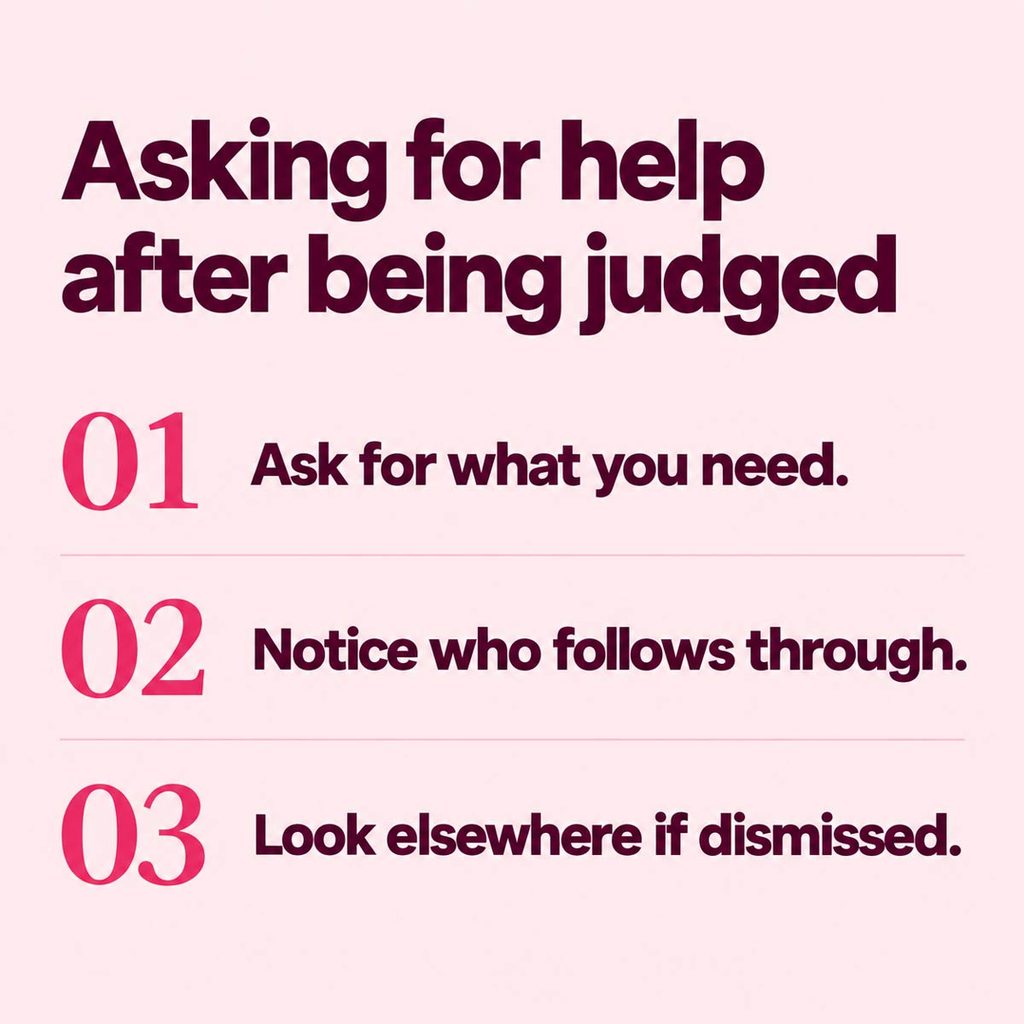
Asking without taking responsibility for everything
If you’ve been dismissed before, another request can feel like an invitation to be embarrassed again. You may need time to decide whom you trust.
When you do ask, being specific can help: “I lose track when there are several steps. Could we write them down as we go?”
Their response gives you information. Do they try to understand the difficulty? Does their help make the task more manageable?
Some relationships can change. Others remain difficult despite your efforts, and seeking support elsewhere may be the better use of your energy. You don’t have to turn every critical person into an ally.
Wrap Up
I still struggle with math, but I also remember what became possible when someone took the time to teach me in a way I could use. The A mattered. So did having a person beside me who was willing to keep working through it.
Has a teacher, colleague, or someone else changed your experience by offering the right support? What did they do that helped?
Essy Knopf is a therapist who likes to explore what it means to be neurodivergent and queer. Subscribe to get all new posts sent directly to your inbox.