

When you can’t be productive, but can’t relax either as a neurodivergent

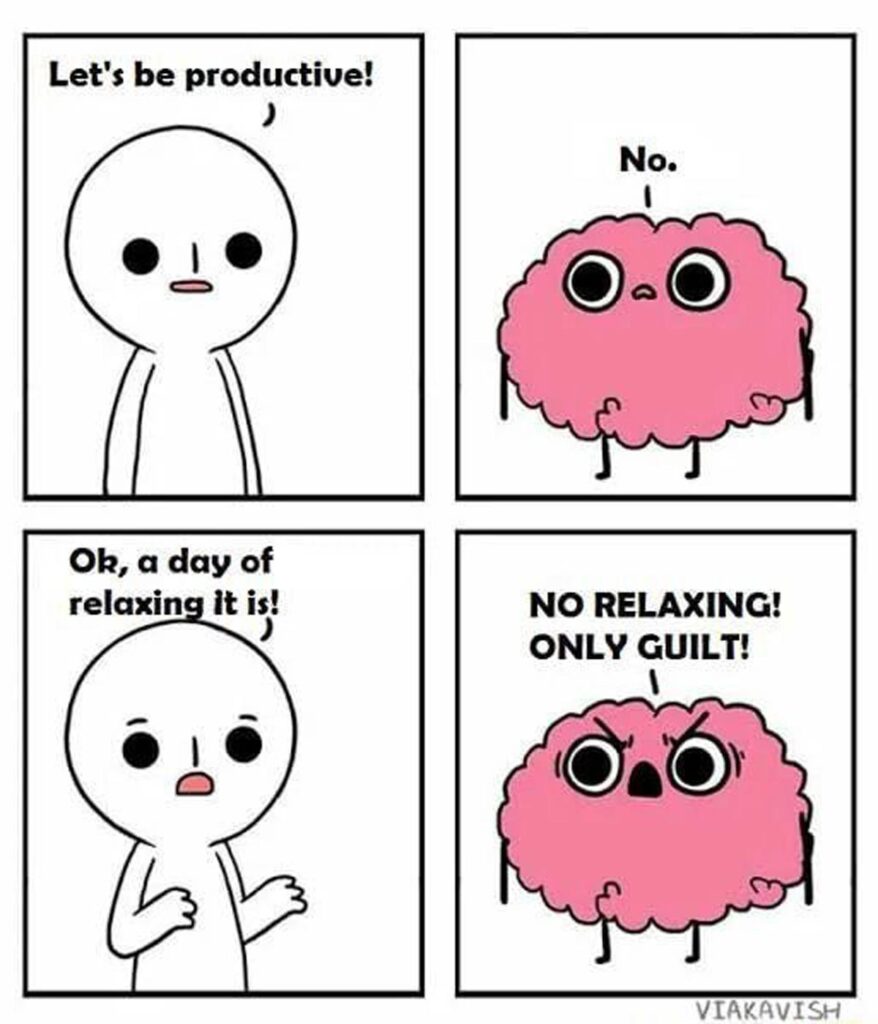
There’s a meme where someone says to their brain, “Let’s be productive.”
The brain says, “No.” So the person says, “Okay, a day of relaxing it is!”
And the brain replies, “No relaxing! Only guilt!”
If you are neurodivergent, this may feel painfully familiar.
You cannot start the task, but you also cannot enjoy the break. You are stuck in the middle: not working or resting, but feeling bad about both.
This is neurodivergent productivity guilt.
For many ADHDers and some autistics, the brain seeks stimulation, novelty, urgency, and reward. Productivity can provide that.
A deadline gives structure; a task gives direction; a completed project gives a hit of satisfaction.
So productivity goes from being a habit, to becoming a way to regulate.
Many neurodivergent people grow up feeling “behind,” “too much,” “lazy,” “scattered,” or “not good enough.”
This can be a result of internalized ableism. In such instances, productivity can become a way to compensate.
You may start to believe: If I do enough, I can prove I’m worthy. If I stay useful, no one can criticize me. If I keep producing, I won’t have to feel ashamed.
That is where neurodivergent productivity guilt becomes painful, and rest starts feeling like failure.
Unstructured time can be hard for autistic and ADHD brains.
Without a clear plan, the mind may start spinning. You may feel restless, guilty, anxious, or even empty.
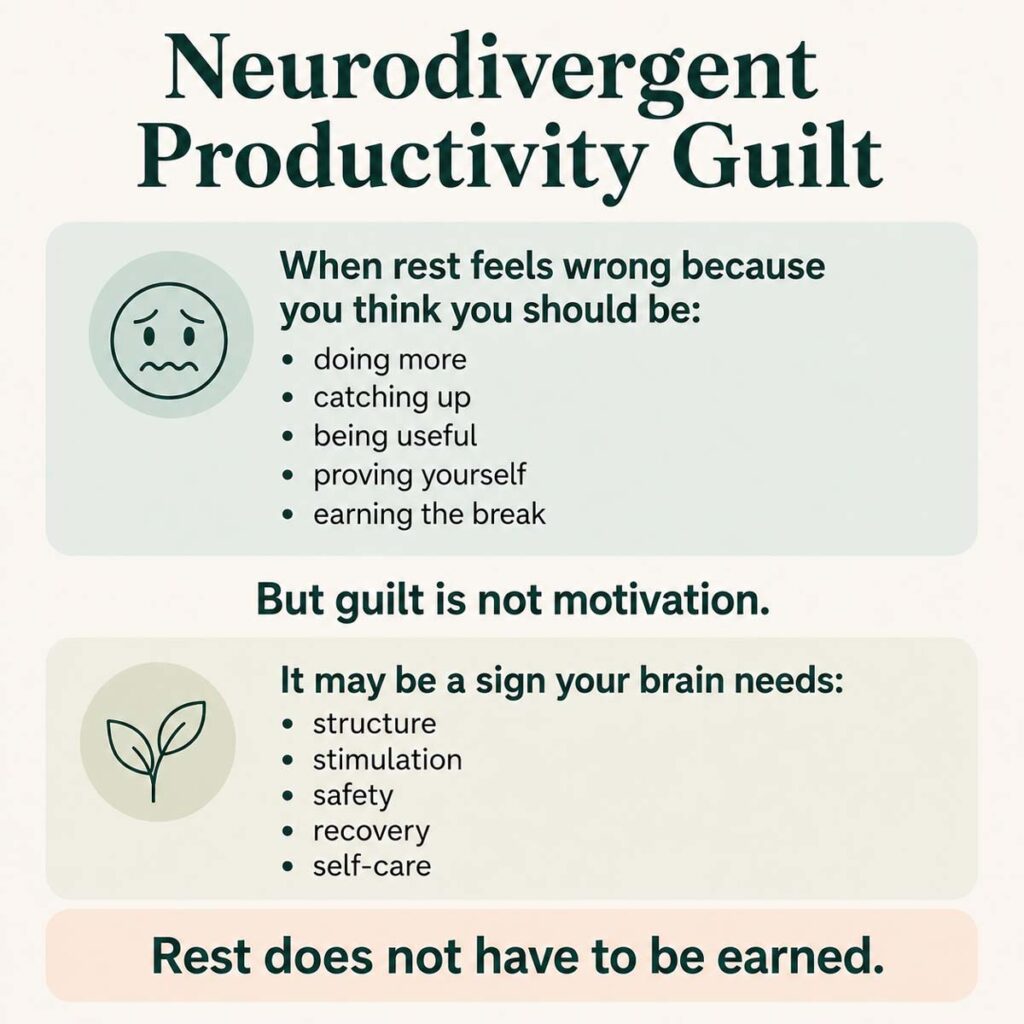
It may mean your brain needs support transitioning out of “doing mode,” and that rest may need to be structured structure.
Forcing yourself into silent, motionless relaxation may not work for your brain.
Instead, try rest that still gives your nervous system something gentle to hold onto. For example, you may:
- Listen to an audiobook while lying down.
- Take a walk without turning it into exercise.
- Watch a familiar show.
- Sit outside for ten minutes.
- Use a weighted blanket.
- Do a low-effort hobby.
- Play a cozy game.
Neurodivergent productivity guilt can make you feel trapped between doing and resting. But that guilt may be a sign that your brain is still learning how to feel safe when you slow down.
Have you experienced the “no productivity, no relaxing, only guilt” spiral?
Essy Knopf is a therapist who likes to explore what it means to be neurodivergent and queer. Subscribe to get all new posts sent directly to your inbox.