

Why neurodivergent people often struggle with attachment
For many neurodivergent people, relationships can feel confusing, intense, or emotionally exhausting. We may crave closeness while also fearing rejection, criticism, abandonment, or emotional overwhelm.
Often, this begins early in life.
Growing up autistic or ADHD in a world that doesn’t always understand neurodivergence can leave lasting emotional impacts. Repeated experiences of invalidation, exclusion, bullying, or inconsistency can shape the way we connect with other people. Over time, this may contribute to insecure attachment patterns.
Some people become anxiously attached, constantly seeking reassurance and closeness. Others become avoidant, learning to rely only on themselves because connection no longer feels emotionally safe. Some experience a mixture of both.
This can create painful relationship dynamics. For example, an anxiously attached person may repeatedly pursue emotionally unavailable partners, mistaking the emotional highs and lows for genuine love or connection.
But emotional intensity is not the same thing as emotional safety.
The encouraging reality is that attachment can change. Healing is possible through what psychologists sometimes call “earned secure attachment,” developing a stronger sense of trust and safety through positive, consistent relationships over time.
And those relationships don’t always have to be romantic.
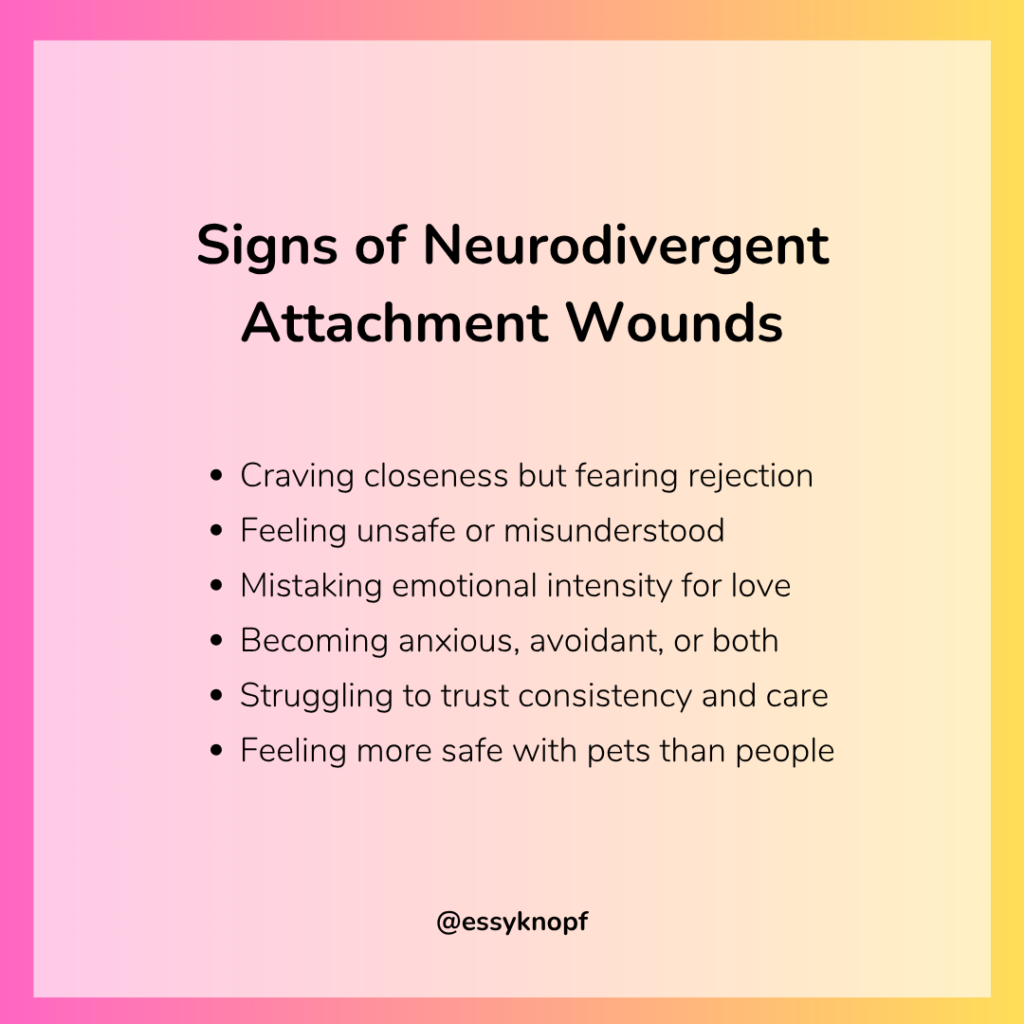
For many neurodivergent people, healing starts with a therapist, a close friend, a family member, or even a pet. Animals especially can offer a form of connection that feels steady, accepting, and emotionally grounding.
Consistent care matters. Safe relationships slowly teach the nervous system that connection does not always lead to shame, abandonment, or rejection.
Those experiences cumulatively can reshape how we relate to ourselves and to others.
Healing neurodivergent attachment wounds doesn’t happen overnight. But with enough safe, supportive experiences, it is possible to feel more secure, connected, and emotionally grounded in relationships.
Have you had a person—or even a pet—who helped you feel safer and more secure over time?
Essy Knopf is a therapist who likes to explore what it means to be neurodivergent and queer. Subscribe to get all new posts sent directly to your inbox.